Tandir Orthopedic Implants
Tandir Orthopedic Implants
Tandir Orthopedic Implants
Select TKR prosthesis systems and precision instruments engineered to optimize surgical accuracy and patient outcomes in the Montenegro market.
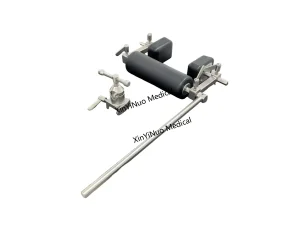
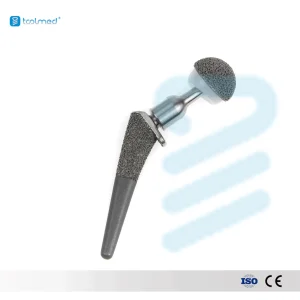
The healthcare infrastructure in Montenegro is experiencing a period of significant modernization, driven by demographic changes and integration efforts with European standards. Joint arthroplasty, specifically Total Knee Arthroplasty (TKA) or Total Knee Replacement (TKR), has emerged as one of the fastest-growing surgical categories in the country. This trend is fueled by an aging population, rising rates of osteoarthritis, and the expansion of clinical capabilities in regional healthcare centers.
Currently, orthopedic care in Montenegro is distributed between major public facilities and a growing network of specialized private clinics. The primary public institution performing high-volume joint replacements is the Clinical Center of Montenegro (Klinički Centar Crne Gore - KCCG) in Podgorica, alongside the renowned Special Hospital for Orthopedics, Neurosurgery and Traumatology "Vaso Ćuković" in Risan. The latter holds a historical reputation across the Balkans for excellence in orthopedic rehabilitation and complex reconstructive surgeries.
For international medical device manufacturers and local distributors, navigating the commercial landscape requires understanding the procurement mechanism. The majority of implants used in the public sector are purchased through tenders managed by Montefarm, the state pharmaceutical and medical supply institution, under the supervision of the Ministry of Health of Montenegro. However, there is a distinct and growing private market in cities like Budva, Podgorica, and Bar, where patients demand premium implant materials, custom-aligned guides, and shorter waiting times. Sourcing compliant, high-quality, and cost-effective joint replacement implants is therefore a strategic priority for Montenegrin distributors looking to bidding successfully for public tenders and private contracts.
For orthopedic implants to be legally marketed and used in Montenegro, they must strictly align with domestic regulations, which are closely harmonized with the European Union's medical device framework. The competent regulatory authority is the Agency for Medicines and Medical Devices of Montenegro (CALIMS - Institut za ljekove i medicinska sredstva Crne Gore).
Under the current Law on Medical Devices of Montenegro, all high-risk implants (Class III, which includes total joint replacement prostheses) must have valid CE marking under the EU Medical Device Regulation (MDR 2017/745) or the legacy Medical Devices Directive (MDD 93/42/EEC) during transitional periods. Sourcing from manufacturers that maintain rigorous ISO 13485 Quality Management Systems is non-negotiable.
Beijing Tandir Medical Device Co., Ltd. excels in assisting international partners by providing a complete documentation package. This includes ISO 13485 certificates, CE documentation, sterilization validation reports (Gamma irradiation for UHMWPE components), and biocompatibility reports (ISO 10993) to facilitate smooth registration through CALIMS.
Established in 2022, Beijing Tandir Medical Device Co., Ltd. has rapidly positioned itself as an elite supplier of medical equipment, orthopedic implants, and precision surgical instruments. Through close collaboration with advanced manufacturing facilities, Tandir integrates cutting-edge engineering with cost-effective production models, offering a highly competitive alternative to traditional, high-priced multinational brands.
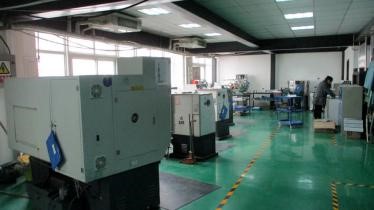
Our partner factories leverage automated production lines, multi-axis CNC milling centers, and advanced surface modification technologies to manufacture joint replacement implants that meet the exact clinical parameters required by European surgeons. By combining strategic logistics channels with direct access to advanced medical metallurgy hubs in China, Tandir guarantees reliable lead times, customized instrument configurations, and substantial cost containment for hospital networks in Montenegro.

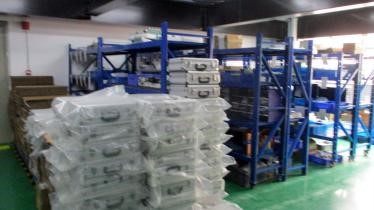
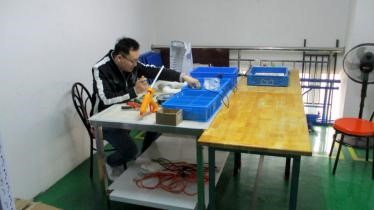
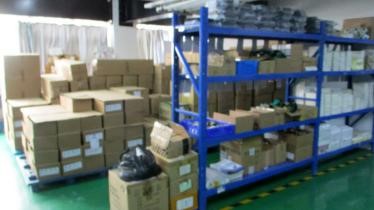
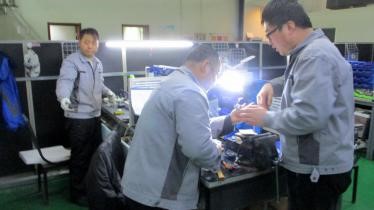
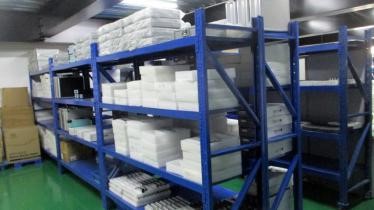
The synergy between R&D and front-line production ensures that every product—ranging from primary TKR systems to complex locking plates and maxillofacial micro-screws—adheres to strict dimensional tolerances. Below is an overview of the partner factory's state-of-the-art production environments and quality control facilities:
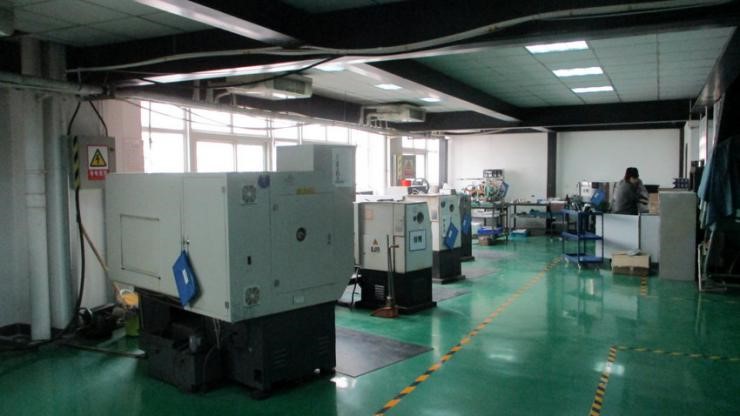
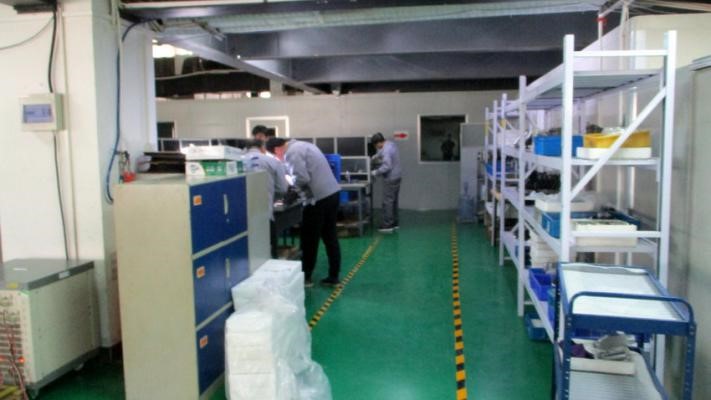
Creating orthopedic implants with long-term clinical survivorship requires highly controlled manufacturing protocols. The workflow below demonstrates our commitment to material traceability, surface precision, and sterility.
B2B procurers, hospital purchasing groups, and regional distributors in Southeastern Europe have strict criteria when selecting orthopedic manufacturing partners. The purchasing decisions are rarely based on cost alone; they require a balanced scorecard that covers:
The field of joint reconstruction is shifting from a generic "one-size-fits-all" approach to personalized, high-performance joint biomechanics. Key global trends that are beginning to impact local hospital procurements in Podgorica and Risan include:
Modern implant portfolios must offer both options. CR systems are preferred when the patient's posterior cruciate ligament (PCL) is functional and stable, allowing for a more natural kinematics profile. PS systems utilize a cam-and-post mechanism to provide mechanical stability when the PCL is absent or compromised, popular in severe deformities.
While bone cement (PMMA) remains the gold standard for many TKR procedures, advanced porous coatings (such as plasma-sprayed titanium or asymmetric porous surfaces) are gaining traction. These coatings facilitate direct osteointegration, offering a durable, biological interface suitable for younger, more active patients.
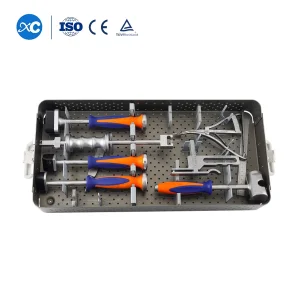
Surgeons are moving away from traditional mechanical alignment (which cuts bone perpendicular to the mechanical axis) toward kinematic alignment, aiming to restore the patient's pre-arthritic constitutional joint line. Supporting this trend requires instrumentation sets that allow flexible, micro-adjustable cuts, alongside compatible interfaces for computer-assisted navigation and robotic surgical arms.
To understand the real-world value of Beijing Tandir's product line, it is helpful to look at how these orthopedic systems function across different hospital structures in Montenegro:
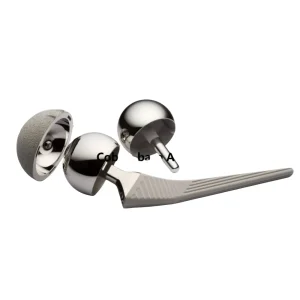
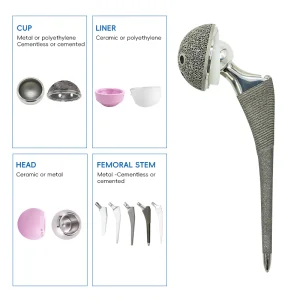
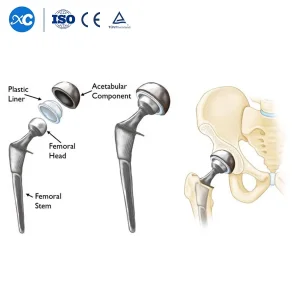
In public tenders issued by KCCG or the Risan Special Hospital, the focus is on clinical reliability backed by extensive registration files and cost efficiency. The Factory Price Titanium Knee Replacement Orthopedic Instrument for Tka/Tkr Primary Total Knee Joint Prosthesis allows public departments to perform standard primary arthroplasties with highly reliable titanium alloys and wear-resistant UHMWPE inserts. This reduces the public healthcare budget burden while ensuring the implant survivorship meets the international average of >95% at 10-year follow-ups.
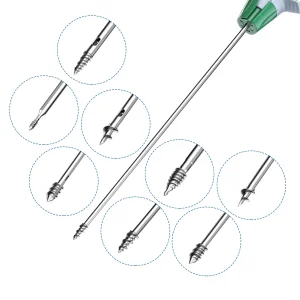
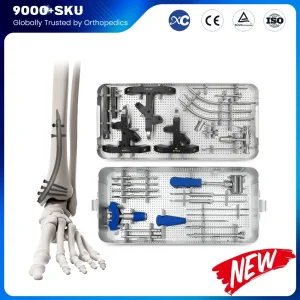
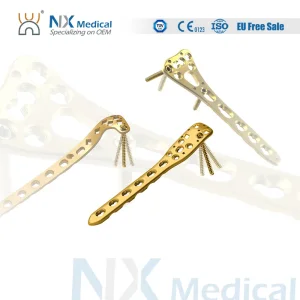
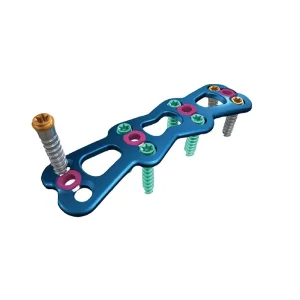
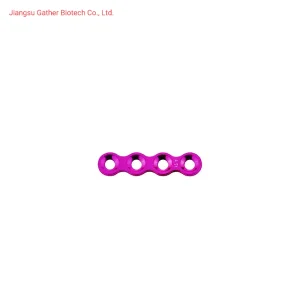
Montenegro's mountainous geography and active coastal tourism industry result in a high volume of orthopedic trauma cases, including complex tibial plateau and proximal femur fractures. Tandir's Orthopedic Plates Titanium Large Fragment Proximal Femur Neck Plate and Expert Retrograde Tibial Intramedullary Nail Instrument Set provide local emergency and orthopedic departments with rapid internal fixation solutions. These systems guarantee anatomical reduction and stable fixation, allowing early mobilization for tourists and local patients alike.
A complete portfolio of sterile implants, trauma fixation plates, intramedullary nails, and precision instruments designed for clinical excellence.