Tandir Orthopedic Implants
Tandir Orthopedic Implants
Tandir Orthopedic Implants
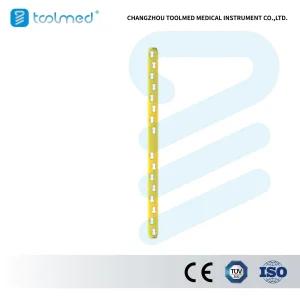
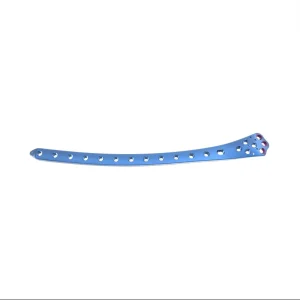
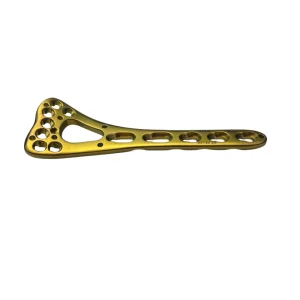
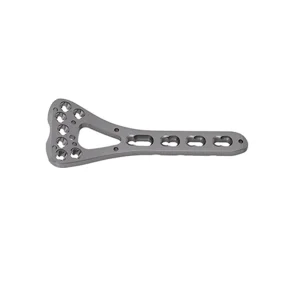
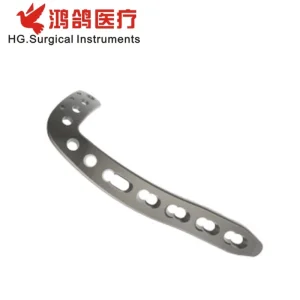
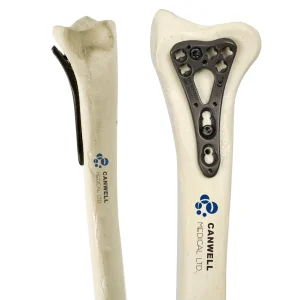
The global orthopedic market is witnessing a seismic shift toward specialized Small Fragment Locking Systems. As healthcare infrastructures evolve in emerging economies and aging populations increase in developed nations, the demand for precise internal fixation devices has skyrocketed. Small fragment systems, typically ranging from 2.7mm to 3.5mm, are crucial for treating fractures in the radius, fibula, and clavicle, where bone morphology requires delicate yet robust support.
Industry reports suggest that the trauma fixation market is expanding at a CAGR of over 6.5%. This growth is fueled by the transition from traditional compression plates to Locking Compression Plates (LCP). Manufacturers and exporters in China have positioned themselves as central pillars of this supply chain, offering high-grade medical Titanium and Stainless Steel implants that match European and American quality standards while maintaining a competitive price point.
One of the most significant trends is the adoption of Variable Angle (VA) Locking Technology. Unlike traditional locking screws that only enter at a fixed perpendicular angle, VA systems allow surgeons to angulate screws within a 30-degree cone. This is particularly beneficial in small fragment applications where bone fragments are minute and difficult to capture. This innovation reduces the risk of joint penetration and improves fixation stability in osteoporotic bone.
Furthermore, there is a massive push towards Minimally Invasive Percutaneous Osteosynthesis (MIPO). Modern small fragment plates are designed with tapered ends and low-profile cross-sections to minimize soft tissue irritation. For global exporters, the integration of AI-assisted manufacturing and 3D printing for customized surgical templates is no longer a futuristic concept but a current requirement for high-end procurement projects.
Sustainability and biocompatibility are also at the forefront. The industry is moving toward advanced surface treatments like Type II Anodization, which enhances the fatigue strength of titanium implants and reduces the incidence of cold welding between screws and plates. As a leading manufacturer, Beijing Tandir ensures that these technological advancements are standard features in our export inventory.
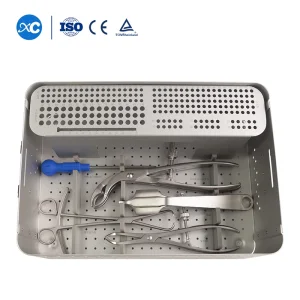
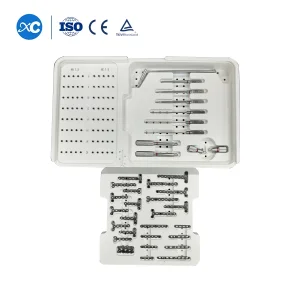
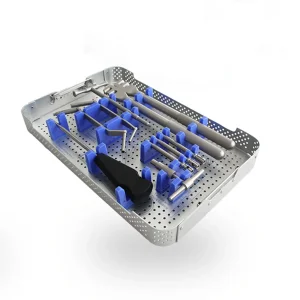
For international medical distributors and hospital procurement officers, sourcing Small Fragment Locking Systems involves balancing rigorous regulatory compliance with logistical efficiency. In regions like Southeast Asia, Latin America, and the Middle East, there is a high demand for "All-in-One" instrument sets that can handle multiple trauma scenarios without requiring a massive footprint in the sterile processing department.
Established in 2022, Beijing Tandir Medical Device Co., Ltd. is a professional supplier of medical equipment, consumables, and surgical instruments. We are dedicated to providing high-quality solutions for the global market. Our strategic location offers convenient logistics, and we have established close cooperation with factories equipped with advanced production facilities.
Our team combines industry expertise with technical precision. From R&D to production and quality control, we collaborate closely to ensure products meet CE/FDA requirements. Customer-centric service and timely delivery are core values embedded in our operations. Our partner factories adhere to international quality standards, emphasizing innovation to meet the constantly changing needs of customers.

China has evolved from a low-cost manufacturing hub into a high-tech center for medical device innovation. The "China Wholesale" tag now represents a blend of massive manufacturing scale and precision engineering. For Small Fragment Locking Systems, Chinese factories leverage advanced Swiss CNC machines that can produce screws and plates with tolerances measured in microns.
One of the primary advantages is the Integrated Supply Chain. In clusters like Jiangsu and Beijing, every step from raw titanium sourcing to medical-grade anodization and sterile packaging happens within a small radius. This proximity allows for rapid prototyping and significantly shorter lead times compared to Western counterparts. Furthermore, the volume of production enables Chinese manufacturers to invest heavily in the latest robotic quality control systems, ensuring that every locking plate that leaves the facility is flawless.
By partnering with an exporter like Beijing Tandir, global buyers gain access to OEM and ODM services. Whether it’s modifying a plate’s curvature for a specific market or developing a custom instrument set, the flexibility of Chinese manufacturing is unparalleled. This is coupled with a deep understanding of international regulatory pathways, including CE marking and ISO 13485 certification, which simplifies the import process for our global partners.
The "Locking" in our Small Fragment Systems refers to the threaded interface between the screw head and the plate hole. This creates a fixed-angle construct, which functions effectively as an "internal-external fixator." Unlike traditional systems that rely on friction between the plate and bone (which can compromise blood supply), locking systems maintain a gap, preserving the periosteum and promoting faster secondary bone healing.
Our titanium alloy (Ti-6Al-4V ELI) ensures the perfect balance between elasticity and strength. The elastic modulus of titanium is closer to human bone than stainless steel, reducing the "stress shielding" effect where the implant takes too much load, causing the bone to weaken over time. For exporters, highlighting these biomechanical advantages is key to winning tenders in modern trauma centers.