Tandir Orthopedic Implants
Tandir Orthopedic Implants
Tandir Orthopedic Implants
The history of Ring Fixators is inseparable from the Russian Federation. Born out of the revolutionary work of Professor Gavriil Abramovich Ilizarov in Kurgan, Siberia, during the 1950s, the Ilizarov method changed the course of orthopedic surgery forever. Today, Russia remains a global epicenter for the research, manufacture, and export of these specialized circular external fixators.
Russia's industrial landscape for medical devices is characterized by a unique blend of historical expertise and modern technological integration. Factories located in industrial hubs such as Kurgan, Moscow, and the Ural region leverage advanced metallurgy to produce rings, rods, and pins that are renowned for their durability and biocompatibility. The "Ilizarov Center" in Kurgan continues to be the primary training and innovation ground, ensuring that Russian exporters maintain the highest standards of the Ilizarov philosophy—Distraction Osteogenesis.
The Russian medical manufacturing sector has seen significant growth, driven by domestic healthcare initiatives and an increasing demand for high-quality orthopedic implants in emerging markets. Exporters focus on providing versatile systems that can handle everything from simple fractures to complex limb reconstruction and congenital deformity corrections.
The evolution of Ring Fixators in Russia is currently moving toward Hybrid and Hexapod systems. While the classic Ilizarov ring remains a staple for its reliability, Russian factories are now incorporating high-tech features to improve patient outcomes and surgical precision.
Russia's vast geography and industrial nature present specific medical challenges where Ring Fixators excel:
In the heavy industrial regions of the Urals and Siberia, high-energy trauma cases are frequent. Russian ring fixators provide the necessary stability for severe open fractures where internal fixation might risk infection.
Russian pediatric orthopedics heavily utilizes small-diameter rings for correcting congenital limb shortening, a practice refined over decades in national health institutes.
Established in 2022, Beijing Tandir Medical Device Co., Ltd. serves as a bridge between high-end manufacturing and global clinical needs. As a professional supplier of medical equipment and consumables, we specialize in high-quality orthopedic solutions, including the renowned Ilizarov systems.
Our geographical location offers convenient logistics, and we have established close cooperation with factories equipped with advanced production facilities. From R&D to production and quality control, our team of 21+ innovation experts ensures that every product meets rigorous international quality standards like CE and FDA.
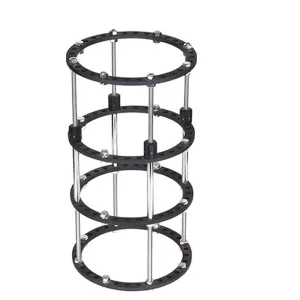
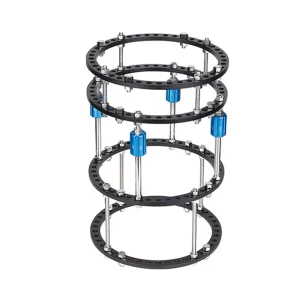
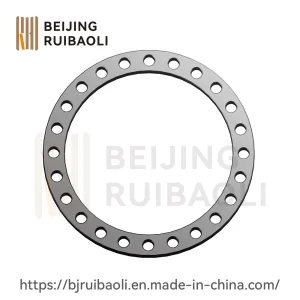
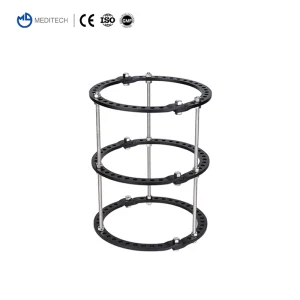
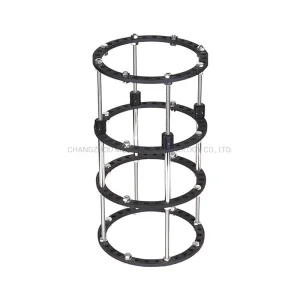
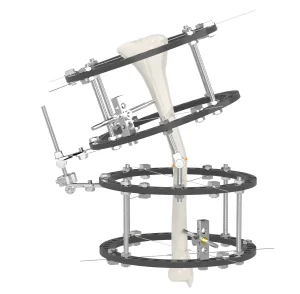
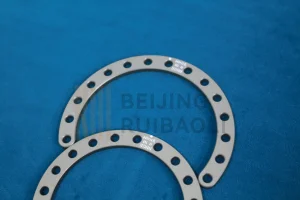
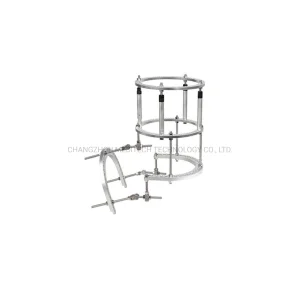
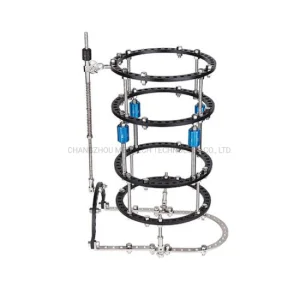
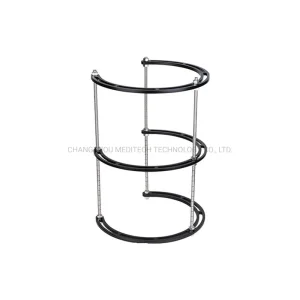
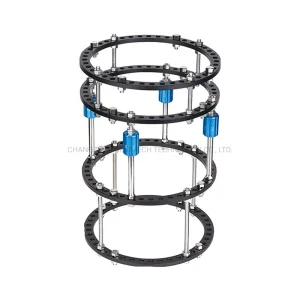
The "Made in Russia" standard for Ilizarov rings is synonymous with reliability. Unlike many mass-produced internal plates, the Ring Fixator is a modular system that requires high-precision manufacturing of its constituent parts: threaded rods, telescopic struts, hinges, and wire-fixation bolts.
Russian exporters have mastered the art of "Modular Versatility." A single kit from a Russian factory can be configured in thousands of ways to treat a simple ankle fracture or a massive 15cm bone deficit. This versatility is vital for hospitals in developing regions where cost-effectiveness and multi-functional equipment are paramount.
In recent years, Russian-made Ring Fixators have seen a surge in exports to Southeast Asia, the Middle East, and Latin America. This is due to the competitive pricing compared to Western European brands, without compromising on the clinical philosophy that made Ilizarov famous. Exporters like Beijing Tandir facilitate this trade by providing local technical support, training materials, and streamlined logistics.
Looking ahead, the Russian orthopedic industry is focusing on bio-absorbable coatings for the pins and wires used in Ring Fixators. This technology, currently being piloted in Moscow-based labs, aims to reduce the risk of pin-site infections—the most common complication of external fixation.
Furthermore, the development of "Smart Rings" equipped with sensors to monitor weight-bearing and bone healing in real-time is on the horizon. These advancements ensure that the legacy of Professor Ilizarov continues to evolve, providing patients around the world with the best possible chance at restoring limb function and quality of life.
Whether you are a medical distributor in South Asia or a hospital procurement officer in Eastern Europe, sourcing Ring Fixators through experienced exporters with strong Russian factory ties ensures you receive products that are clinically proven and technologically advanced.