Tandir Orthopedic Implants
Tandir Orthopedic Implants
Tandir Orthopedic Implants
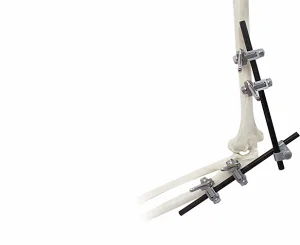
Engineered to meet the emergency orthopedic requirements of Dominica’s leading clinical centers, providing rapid mechanical stability for complex fractures.
A comprehensive analysis of Dominican healthcare demands, traumatic injury management, and structural medical supply chains.
The Commonwealth of Dominica, characterized by its rugged, mountainous volcanic terrain and unique transport corridors, faces distinct challenges in trauma management. With key medical facilities like the Dominica China Friendship Hospital (DCFH) in Roseau and the Portsmouth Hospital acting as the primary critical care hubs, orthopedic surgeons operating in these zones require access to highly adaptable, modular, and structurally sound linear external fixators. Traumatic injuries resulting from high-impact road traffic accidents along steep terrains, agricultural operations, and seasonal natural disasters (such as hurricanes) call for rapid-stabilization instruments that can be deployed quickly under variable clinical conditions.
Dominica relies entirely on the importation of high-grade surgical instruments and implant systems. The logistics pipeline from major global manufacturing hubs to Roseau or Melville Hall (Douglas-Charles Airport) demands clean, reliable customs clearance and compliance with strict Caribbean regulatory protocols. For medical device distributors and hospital procurement departments in Roseau, working with an exporter that understands CE and ISO compliance ensures uninterrupted sterile supplies. Moreover, tropical environments require medical equipment with robust corrosion resistance—an area where medical-grade Titanium Alloys (Ti-6Al-4V) and high-strength Stainless Steel (316LVM) excel compared to inferior grade alternatives.
How material sciences, biomechanical research, and modern surgical techniques are shaping the future of fracture fixation.
Globally, the market for external fixator devices has evolved from heavy, complex frames to lightweight, radiolucent, modular systems. Modern orthopedic surgery prioritizes patient mobility and early load-bearing capacity, which accelerates bone healing (osteogenesis) and prevents muscle atrophy. Today’s linear external fixators incorporate advanced features such as:
The integration of carbon fiber rods allows orthopedic surgeons to clearly observe bone healing under fluoroscopy (C-arm) and X-ray systems without metal-induced artifacts obstructing the fracture site.
Improved clamping mechanisms permit high torque retention without rod-slippage, ensuring that multi-planar configurations remain stable under physiological loads.
Transitioning from rigid static constructs to controlled dynamic loading helps stimulate callus formation during the remodeling phase of secondary bone healing.
As a leading supplier, Beijing Tandir Medical Device Co., Ltd. monitors these global developments, integrating these advancements directly into our product lines to serve regions with demanding logistics, including Dominica. Our systems guarantee simplicity in instrumentation, reducing the cognitive load on surgeons in high-pressure trauma theaters.
A comparative overview of our external fixation material grades engineered for maximum clinical longevity.
| Material Specification | Tensile Strength (MPa) | Density (g/cm³) | MRI/CT Compatibility | Primary Surgical Application in Dominica |
|---|---|---|---|---|
| Titanium Alloy (Ti-6Al-4V ELI) | 860 - 900 | 4.43 | Excellent (Minimal Artifact) | Pediatric & adult limb reconstructive surgeries, long-term fixator setups. |
| Stainless Steel (316LVM) | 490 - 1350 | 7.95 | Moderate (Generates Artifacts) | Emergency trauma fixation, short-term stabilization, instrumentation tools. |
| Carbon Fiber Composite Rods | 1200 - 1500 | 1.80 | Outstanding (100% Radiolucent) | Multi-segmental fractures, real-time intraoperative radiological scanning. |
Direct scenarios showing the critical nature of modular linear external fixator configurations in local settings.
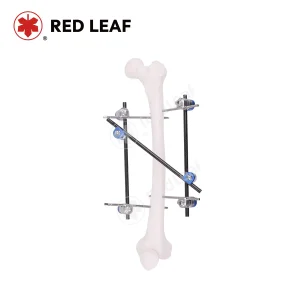
An emergency patient arrives at the Dominica China Friendship Hospital with an open, unstable type III tibia fracture following a vehicle accident on mountainous wet roads. Due to severe soft-tissue laceration and contamination risks, immediate internal plate fixation is contraindicated. The surgical team deploys the Tandir Tibia External Fixator System. Within 20 minutes, the frame is constructed percutaneously, restoring anatomical length and alignment while providing absolute stability, allowing soft tissues to heal before definitive secondary surgery.
During extreme weather events, local clinical centers across Dominica's parishes (e.g., St. John, St. Patrick) can become isolated due to mudslides blocking access to the capital. Having stockpiles of Tandir External Fixation Modular Kits allows regional clinics to stabilize patients on-site. The simple mechanics of the universal pin-clamps require minimal surgical instrumentation, allowing general surgeons to confidently apply the frames under basic local anesthesia if orthopedic specialists are delayed by road blockages.
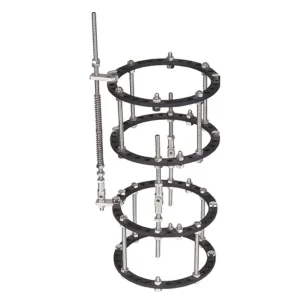
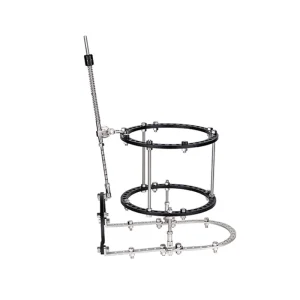
Chronic orthopedic conditions, non-unions resulting from previous untreated fractures, or congenital limb shortening are systematically treated using Ilizarov Ring Fixators and Dynamic Axial Fixators. These systems allow micro-adjustability over weeks, supporting osteogenesis and correct alignment. Our customized connecting rods and ring components facilitate highly individualized configurations tailored specifically to the patient’s physical geometry.
Partnering with advanced manufacturing operations to supply elite-quality orthopedic devices globally.
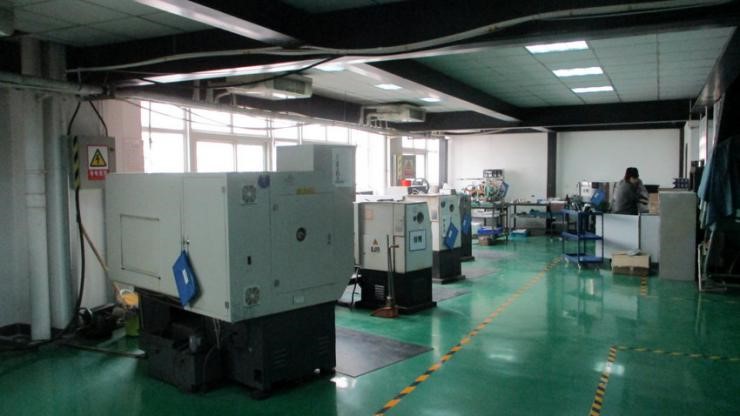
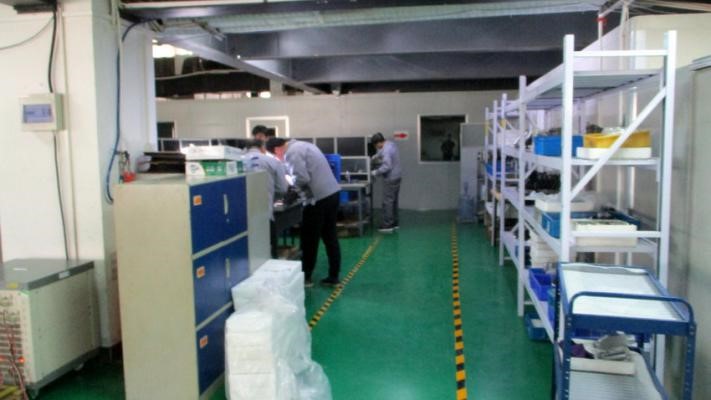
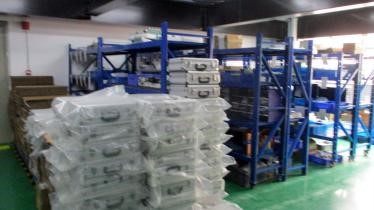
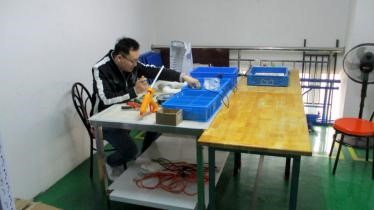
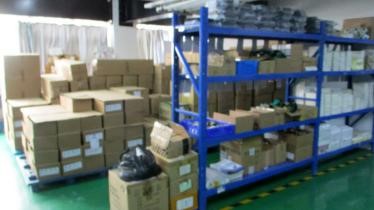
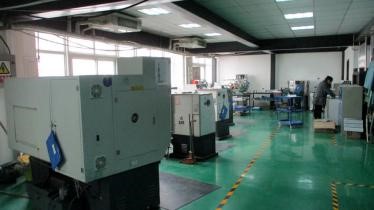
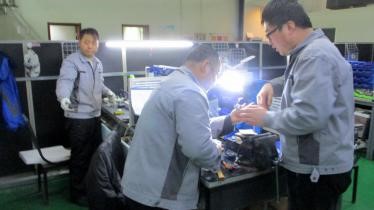
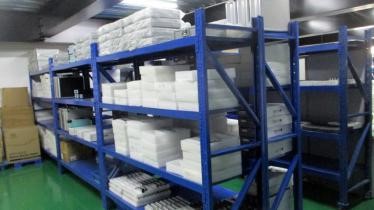
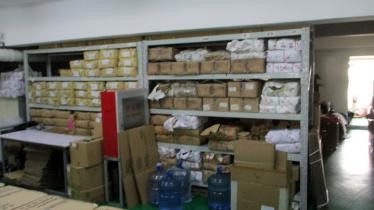
Beijing Tandir Medical Device Co., Ltd. was established in 2022. It is a professional supplier of medical equipment, medical consumables and medical equipment, dedicated to providing high-quality solutions for the global market. Its geographical location offers convenient logistics, and it has established close cooperation with factories equipped with advanced production facilities, adhering to international quality standards and emphasizing innovation to meet the constantly changing needs of customers.
Our team combines industry expertise with technical precision, supported by partner factories featuring skilled front-line employees. From R&D to production and quality control, we collaborate closely to ensure products meet CE/FDA requirements. Customer-centric service and timely delivery are core values embedded in our operations.
Innovative trajectories and material research guiding our upcoming developments.
As trauma orthopedics trends toward personalized medicine, Beijing Tandir Medical Device Co., Ltd. is actively expanding its product development parameters. The next phase of our technological roadmap focuses on three core areas:
Essential insights regarding compliance, shipping, sterilization, and configuration of our external fixators for Dominica.
Explore our full line of clinical solutions designed for upper/lower limbs, ankles, and specialized joint reconstructions.