Tandir Orthopedic Implants
Tandir Orthopedic Implants
Tandir Orthopedic Implants
Explore our premium orthopedic external fixators engineered to deliver maximum biomechanical stability under demanding clinical scenarios across Rwandan health networks.
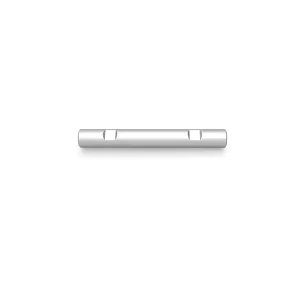
Over the past decade, Rwanda has emerged as a regional pioneer in healthcare reform across East Africa. Driven by the government’s Vision 2050 blueprint, the Ministry of Health (MoH) has systematically upgraded rural district clinics and primary referral hubs, such as the Centre Hospitalier Universitaire de Kigali (CHUK) and King Faisal Hospital. This infrastructure upgrade has significantly altered clinical sourcing requirements, shifting from basic skeletal traction setups toward advanced, modular external fixation methodologies.
In Rwanda, the clinical urgency for high-quality orthopedic implants is largely catalyzed by rapid urbanization, extensive infrastructure construction, and a dense network of motorcycle transit (known locally as 'motos'). Consequently, high-energy tibial, femoral, and distal radius fractures represent a significant portion of trauma admissions. Open fractures associated with soft-tissue loss require stable external skeletal stabilization to mitigate risks of osteomyelitis and malunion. As local surgical residencies expand, the demand for linear external fixators that balance high structural stiffness with straightforward construct design is higher than ever.

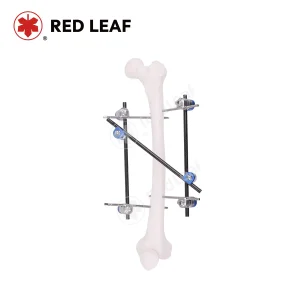
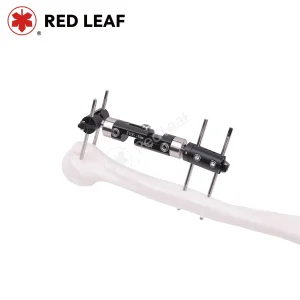
Surgical outcomes depend on the biomechanical design of the external fixator. Historically, bulky ring-based designs (such as traditional Ilizarov frames) dominated reconstructive orthopedics. However, linear external fixators have changed trauma surgery by providing a unilateral, low-profile alternative. By utilizing high-strength pins (Schanz screws) connected via rigid rods, linear fixators reduce assembly times under emergency conditions, which is crucial for polytrauma cases in Rwanda's referral hospitals.
The material composition of linear systems directly impacts patient recovery and radiology procedures:
For hospital systems in Kigali, Huye, and Gisenyi, procuring versatile systems that can shift from rigid stabilization in the acute trauma phase to dynamic load-sharing during recovery helps reduce overall patient stay durations and reduces total healthcare expenditure.
Established in 2022, Beijing Tandir Medical Device Co., Ltd. is a supplier of orthopedic medical equipment and surgical consumables, optimizing supply chain resilience to serve markets throughout East Africa.
In modern medical device manufacturing, quality control must be consistent throughout the production process. Our strategic manufacturing partnerships deploy state-of-the-art multi-axis CNC machines and automated polishing centers. This setup ensures that every connecting rod, clamp, pin, and wrench meets strict international tolerances.
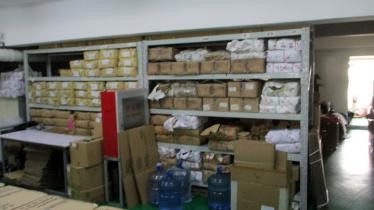
Recognizing the challenges of international shipping, Beijing Tandir operates from a logistics-optimized location. This enables rapid air and sea freight routing to East Africa via Kigali International Airport and the Mombasa/Dar es Salaam port corridors. By maintaining safety stock levels for standard linear rods, clamps, and Schanz pins, we reduce procurement lead times for hospitals across Rwanda.
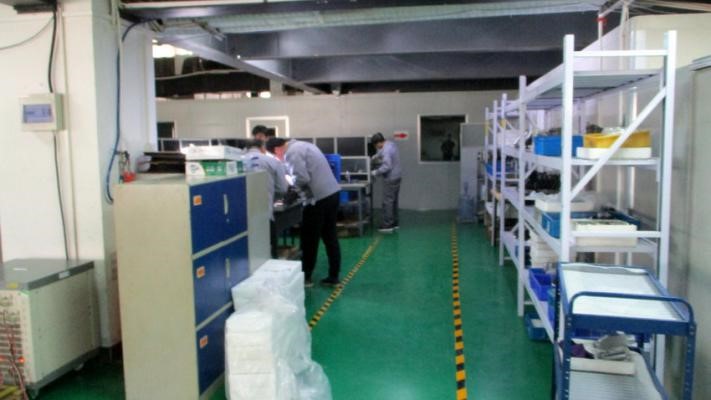
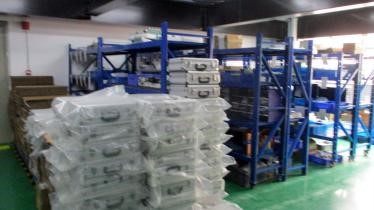
We source medical-grade titanium and stainless steel bar stocks with full heat-number traceability certificates.
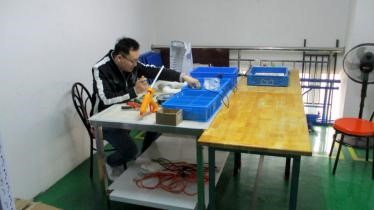
Precision assembly of mechanical clamps and multi-pin connectors to ensure stable load locking during clinical use.
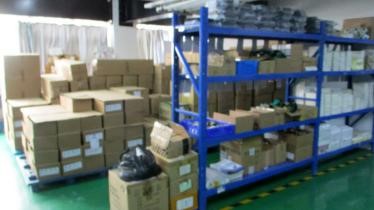
Maintaining raw material stockpiles to buffer global supply fluctuations and stabilize production timelines.
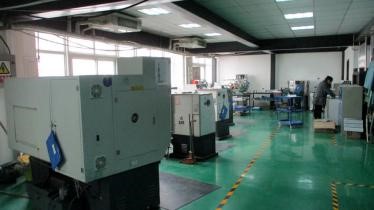
High-precision turning of Schanz pins and threaded rods to achieve exact thread pitch accuracy for reliable bone engagement.
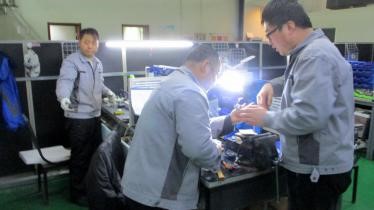
Manual and semi-automated assembly steps under controlled environments to minimize contaminants before final packaging.
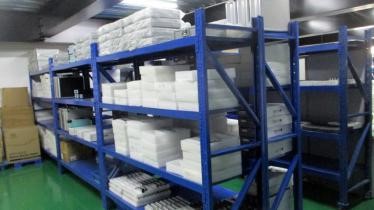
Verification of dimensional accuracy, thread tolerances, and surface integrity prior to final release.
Our external fixation systems are designed to address the specific clinical challenges encountered in Rwandan healthcare facilities:
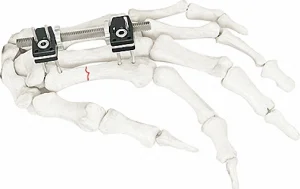
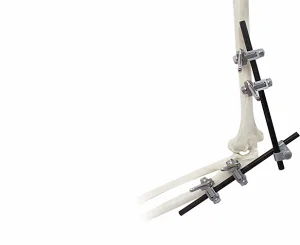
In emergency admissions following road traffic accidents, our Tibia & Percone External Fixator provides rapid skeletal stabilization. This mechanical construct enables doctors to secure alignment while leaving soft tissue accessible for secondary wound care, skin grafting, or vacuum-assisted closure therapies.
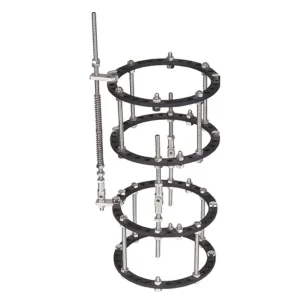
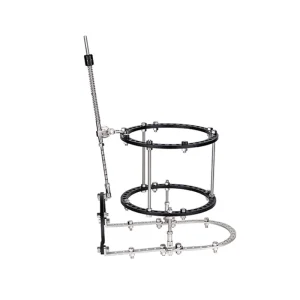
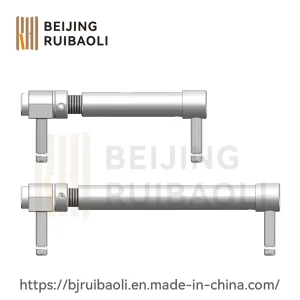
For patients requiring bone transport or deformity correction due to chronic non-union, our Ilizarov Ankle & Joint Fixators allow for controlled distraction osteogenesis. The high mechanical stiffness of the modular connecting rods prevents angular displacement during long-term rehabilitation.
Expert insights addressing key regulatory, logistical, and technical questions relevant to biomedical engineers, orthopedic buyers, and hospital administrators in Rwanda.
A comprehensive inventory of external fixators, instrumentation tools, and trauma hardware designed to meet standard surgical requirements.