Tandir Orthopedic Implants
Tandir Orthopedic Implants
Tandir Orthopedic Implants
Explore certified medical-grade titanium locking plates, surgical sets, and specialized surface treatment systems engineering excellence.
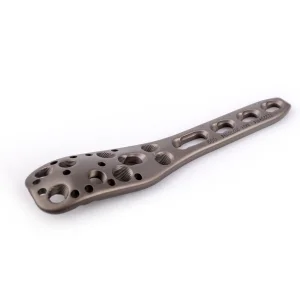
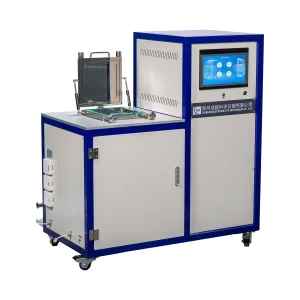
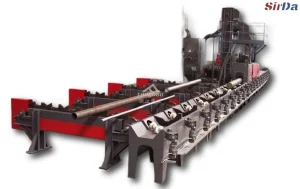
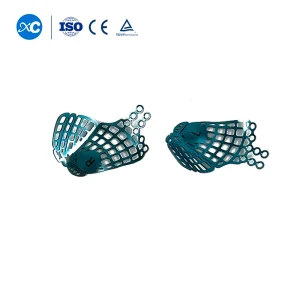
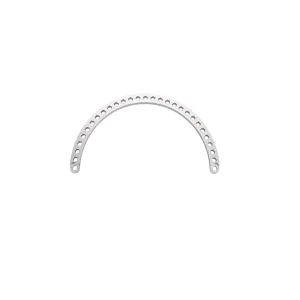
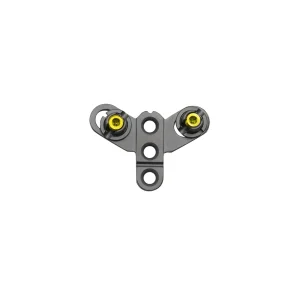
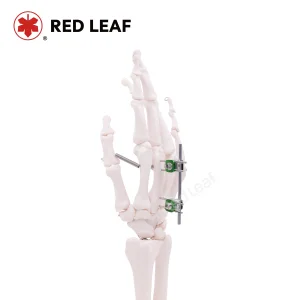
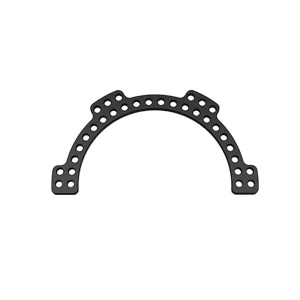
In the rapidly evolving landscapes of medical trauma management, specialized orthopedic surgery, and heavy industrial fastener engineering, locking plate technology represents a pinnacle of structural biomechanics and stress distribution optimization. Modern locking compression plates (LCPs) operate on a fundamentally superior mechanical principle compared to traditional dynamic compression plates. By creating a rigid, fixed-angle construct where the threaded screw head locks directly into the internally threaded plate hole, locking plate systems function as an internal-external fixator. This design eliminates the necessity of forcing the plate against the underlying periosteum, preserving vital cortical blood supply, drastically reducing thermal necrosis risk, and mitigating premature implant loosening.
Global procurement divisions within healthcare networks, OEM distributors, and structural engineering firms are faced with increasingly complex regulatory, metallurgical, and supply chain demands. Choosing top-tier, trusted locking plate factories and suppliers requires evaluating advanced CNC micro-machining tolerances, strict compliance with international medical device directives (such as ISO 13485:2016, EU MDR 2017/745, and US FDA 510(k)), and scalable manufacturing throughput. This whitepaper presents an authoritative analysis of manufacturing capabilities, global compliance benchmarks, technological trajectories, and strategic procurement solutions in the locking plate sector.
Rigorous selection of raw materials, micro-thread tolerances, and surface energy functionalization.
Utilizing high-purity Titanium Alloy Grade 5 Extra Low Interstitial (Ti-6Al-4V ELI) offers unparalleled biocompatibility, lower elastic modulus closer to native bone (reducing stress shielding), and superior fatigue strength under cyclic axial loads.
Internal double-threaded locking mechanisms provide rigid angle-stable fixation. Screw heads engage with female threads inside the plate holes, preventing secondary displacement under varus/valgus stress and ensuring optimal healing in osteoporotic bone.
Through Type II Electrochemical Anodization and Atomic Layer Deposition (ALD), locking plates achieve anti-galling properties, enhanced osseointegration, micro-crack corrosion resistance, and reduced bacterial adhesion rates.
China has established itself as the global epicenter for precision medical device fabrication and high-load structural hardware manufacturing. Specialized industrial corridors—such as the Changzhou Medical Device Industrial Park, Beijing High-Tech Bio-Clusters, and Jiangsu Engineering Hubs—house fully integrated supply ecosystems. This strategic spatial concentration allows raw material suppliers, multi-axis Swiss CNC lathing facilities, surface functionalization laboratories, and sterile packaging facilities to operate in seamless synchronization.
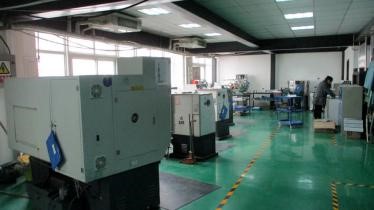
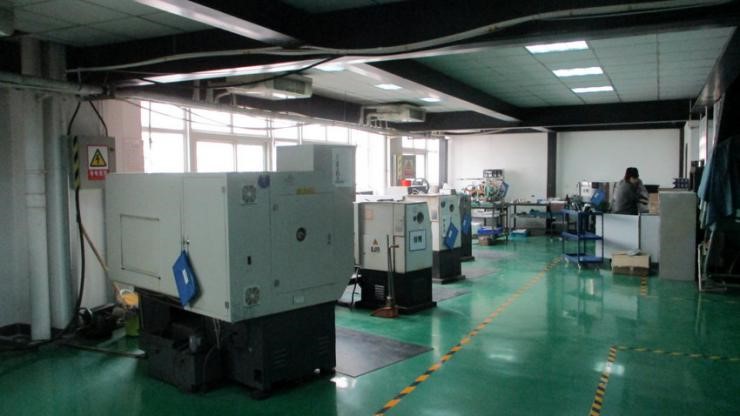
Chinese factories utilize high-end 5-axis and 9-axis Swiss-type automatic CNC sliding head lathes (DMG MORI, Citizen, Tornos), executing complex anatomical contours and sub-micron thread tolerances down to ±0.005 mm.
From initial DICOM 3D reconstruction modeling to rapid prototyping within 72 hours, Chinese manufacturers provide extensive OEM/ODM customization for specialized trauma, maxillofacial, pediatric, and industrial locking needs.
Vertical supply integration yields a 35% to 50% cost advantage over Western counterparts without compromising raw material integrity, enabling regional healthcare providers to access premium locking solutions.
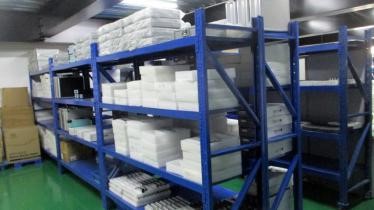
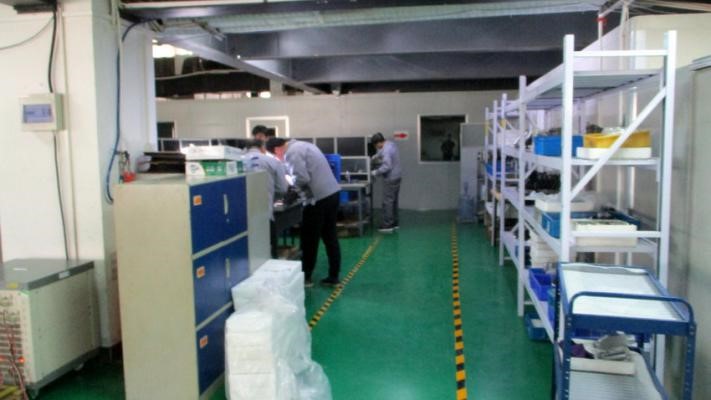
Pioneering standard-compliant production infrastructure and international medical equipment supply chains.
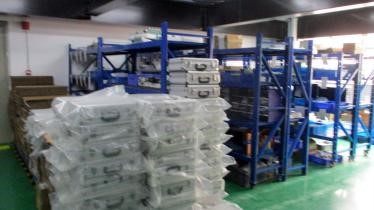
Beijing Tandir Medical Device Co., Ltd. was established in 2022. It is a professional supplier of medical equipment, medical consumables, and high-precision trauma systems, dedicated to providing high-quality solutions for the global market. Its strategic geographical location offers convenient international logistics networks, establishing close cooperation with modern factories equipped with advanced production facilities. Adhering strictly to international quality standards, Beijing Tandir emphasizes technological innovation to satisfy the dynamic requirements of global healthcare systems.
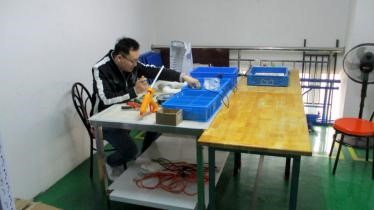
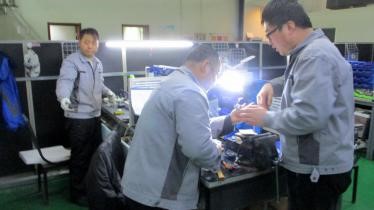
Our specialized operational team seamlessly integrates industry expertise with technical precision. Collaborating closely from early-stage conceptual research and development to automated lathing, assembly, and rigorous ISO 13485 quality control, we ensure all products comply with stringent CE and FDA requirements. Customer-centric service, transparent batch traceability, and guaranteed on-time delivery form the core values embedded in our daily operations.



Deploying specialized locking systems across anatomical clinical surgical procedures and heavy industrial infrastructure.
Anatomically pre-contoured proximal humerus and distal tibial locking compression plates allow precise anatomical reduction. Fixed-angle construct protects soft tissue blood supply while ensuring instant stability for early mobilization.
Ultra-thin 1.0mm to 1.5mm titanium mesh and orbital floor locking plates enable micron-level malleability, providing dynamic structural support for complex facial reconstructive and micro-vascular surgical procedures.
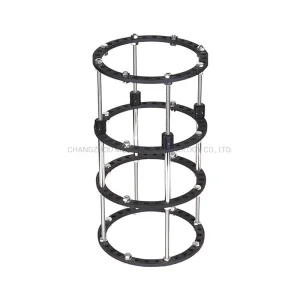
Mini external fixator frames and Ilizarov half-ring assemblies provide variable multi-planar structural stabilization for complex limb lengthening, non-unions, and joint distraction in human and veterinary clinical settings.
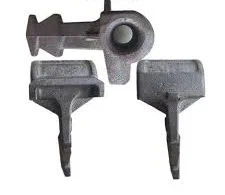
Engineered locking plates extend to structural transit components like GOST Railway Shoulder APC-4 and QT500-7 cast iron rail plates, delivering extreme dynamic vibration damping under heavy freight loads.
Continuous feed blasting machines and CVD Atomic Layer Deposition (ALD) units provide high-throughput surface conditioning, essential for applying anti-wear atomic powder coatings prior to mechanical plating.
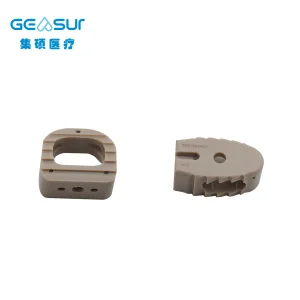
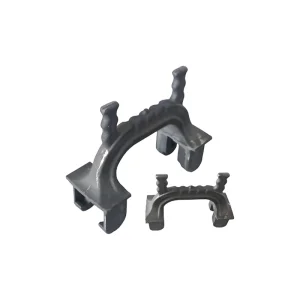
Low-profile vertebral hooks, titanium pedicle screws, and PLIF lumbar interbody PEEK cages offer rigid stabilization for complex spinal deformities, degenerative disc disease, and traumatic spinal fractures.
Sourcing medical locking plates and industrial structural components requires a comprehensive vendor evaluation framework. Hospital purchasing groups, healthcare distributors, and OEM buyers must audit factory partners against key technical benchmarks to ensure zero-defect quality and absolute patient safety:
Insist on complete mill test certificates (MTC) according to EN 10204 3.1 standards. Verified suppliers perform optical emission spectrometry on raw titanium bars to guarantee strict adherence to ASTM F136 / ISO 5832-3 chemical composition limits.
Locking plates intended for surgical implantation must be machined, ultrasonically cleaned, and packaged within certified ISO Class 7 or Class 8 cleanroom environments, preventing particulate or bioburden contamination.
Ensure manufacturers validate plate geometries under ASTM F382 (Standard Specification and Test Method for Metallic Bone Plates). Four-point bending tests prove the implant's resistance to structural failure over millions of cyclic load shifts.
The locking plate industry is experiencing a technological convergence driven by additive manufacturing, digital surgical planning, and smart biomechanical telemetry:
Selective Laser Melting (SLM) enables the creation of custom titanium locking plates with porous internal lattice structures that mirror cancellous bone architecture, encouraging rapid cellular ingrowth and bone bridging.
Innovations in bioabsorbable magnesium-zinc-calcium alloys eliminate the need for secondary hardware removal surgeries. Next-gen locking plates degrade safely into non-toxic ions as the natural bone remodel succeeds.
Embedding micro-electro-mechanical systems (MEMS) into titanium locking plates allows orthopedic surgeons to monitor real-time strain reduction, load distribution, and fracture healing velocity remotely via wireless telemetry.
Expert technical answers to essential procurement and biomechanical queries.
Dynamic Compression Plates rely strictly on friction generated between the plate and the underlying bone surface, requiring tight mechanical compression achieved by tightening non-locking screws. This can compromise periosteal blood supply. In contrast, Locking Compression Plates feature threaded screw holes that lock directly to the screw head, creating a fixed-angle construct. This eliminates the reliance on bone-plate friction, preserves periosteal blood circulation, and reduces post-operative fixation failure, particularly in osteoporotic bone.
Titanium Grade 5 (Ti-6Al-4V ELI) offers an elastic modulus (~110 GPa) significantly closer to human cortical bone (~18 GPa) than 316L Stainless Steel (~200 GPa). This substantially reduces stress shielding effects, promoting natural osseous remodeling. Titanium also possesses higher fatigue strength, superior MRI compatibility (producing fewer artifacts), and exceptional biological inertness.
Global healthcare procurement directors must demand ISO 13485:2016 certification for medical device quality management systems, CE marking under EU MDR 2017/745 for European distribution, and US FDA 510(k) clearances for North American markets. Additionally, raw material batch test certificates (MTC EN 10204 3.1) and dynamic four-point bending fatigue test reports under ASTM F382 are crucial.
Yes. Premium Chinese manufacturers like Beijing Tandir Medical Device Co., Ltd. maintain dedicated R&D engineering teams equipped with 3D CAD modeling software, high-speed Swiss-type CNC machines, and rapid prototyping capabilities. Custom plate contouring, specialized hole configurations, dynamic screw thread pitching, and private labeling can typically be prototyped and validated within tight production windows.
Atomic Layer Deposition (ALD) allows nanoscale, pinhole-free film coatings to be deposited uniformly across intricate double-threaded locking holes and complex plate geometries. ALD surface functionalization enhances wear resistance, prevents titanium cold-welding (galling) between screw threads and plate holes, and reduces metal ion release into surrounding biological tissue.
Explore further medical instrument sets, intramedullary nails, and industrial structural tie components.