Tandir Orthopedic Implants
Tandir Orthopedic Implants
Tandir Orthopedic Implants
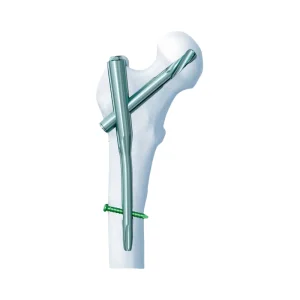
The global orthopedic trauma market has witnessed a significant paradigm shift toward intramedullary fixation, particularly for proximal femoral fractures. As the global population ages, the incidence of hip fractures—often resulting from low-energy falls in geriatric patients with osteoporosis—has surged. This biological reality has positioned Proximal Femoral Nailing Systems (PFNS) as a cornerstone of modern trauma surgery.
Industrial data suggests that the demand for PFNA (Proximal Femoral Nail Antirotation) systems is growing at a CAGR of over 6.5%. In developed regions like North America and Europe, the focus is on "Early Total Care," where stabilizing a fracture within 24 hours is vital for reducing mortality rates. In emerging markets across Asia-Pacific and Latin America, the primary driver is the modernization of healthcare infrastructure and a shift from traditional plating to more advanced, minimally invasive nailing techniques.
Projected to reach multi-billion dollar valuations as robotic-assisted surgeries integrate with nail systems.
Transitioning from pure stainless steel to high-tensile Titanium alloys (Ti6Al4V ELI) for better biocompatibility.
Surgeons worldwide prefer PFNA for its superior rotational stability and biomechanical load-sharing capabilities.
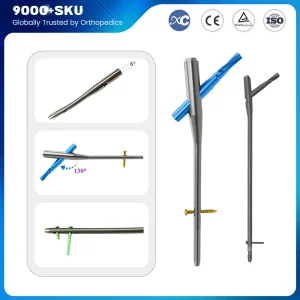
The evolution of the Proximal Femoral Nailing System has led to the development of the PFNA (Antirotation). This system utilizes a helical blade instead of a traditional lag screw, which provides better bone compaction in osteoporotic bone. This innovation significantly reduces the risk of "cut-out," a common failure in hip fracture fixation.
For global distributors and hospital procurement departments, sourcing these systems from a reliable China supplier ensures access to world-class manufacturing at a competitive price point. Our systems are designed to minimize surgical time while maximizing patient stability, allowing for early mobilization and shorter hospital stays.
The industry is currently moving toward "Smart Implants" and patient-specific instrumentation. While standard PFNA systems remain the gold standard, there is an increasing trend toward shorter nails for trochanteric fractures and longer nails for subtrochanteric or pathological fractures. Furthermore, the integration of 3D-printed surgical guides is helping surgeons achieve perfect entry points, reducing fluoroscopy time and radiation exposure.
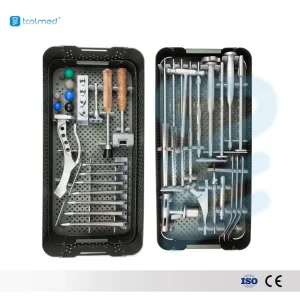
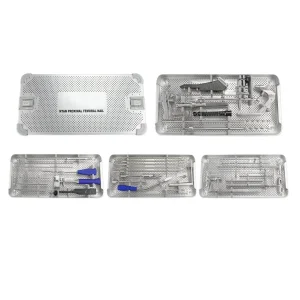
In local healthcare scenarios, such as regional trauma centers in Southeast Asia or large public hospitals in Brazil, the need is for versatile and cost-effective instrumentation. These regions require robust supply chains that can deliver comprehensive sets including both the implants and the specialized instrument kits required for the procedure.
International medical device buyers—ranging from Ministry of Health (MoH) tenders to private surgical distributors—look for three critical pillars:
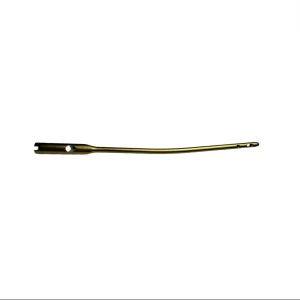
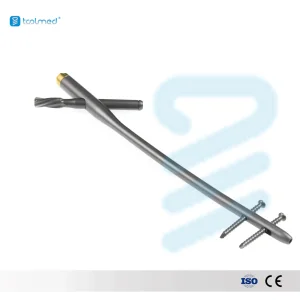
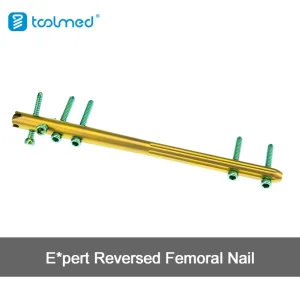
The Interlocking Intramedullary Nail remains the definitive treatment for long bone fractures. Our systems feature multi-planar locking options at the distal end, ensuring that even complex fracture patterns can be stabilized with high precision. The anatomical curvature of our nails is optimized for the global population, reducing the risk of cortical impingement during insertion.
By leveraging advanced CNC machining and surface treatment technologies, our factory produces nails with a micro-textured finish that promotes better soft-tissue integration where necessary. This attention to detail is why Beijing Tandir is recognized as a premier exporter in the orthopedic space.
Established in 2022, Beijing Tandir Medical Device Co., Ltd. has rapidly emerged as a professional powerhouse in the global medical equipment supply chain. Located strategically in Beijing, we utilize China's advanced logistics network to serve clients in over 50 countries. Our core mission is to bridge the gap between high-end R&D and affordable medical consumables without compromising on safety or quality.

Choosing a Chinese manufacturing partner like us offers distinct industrial advantages. Firstly, the "Symmetry of Supply Chain"—having raw material suppliers, CNC tooling experts, and surface treatment facilities within a tight radius—allows for unprecedented speed in production. Secondly, our Skilled Professionals & Partner Factories implement a "Total Quality Management" (TQM) approach, ensuring every screw and nail is inspected via automated optical systems before shipment.
Our team combines industry expertise with technical precision, supported by partner factories featuring skilled front-line employees. From R&D to production and quality control, we collaborate closely to ensure products meet CE requirements. Customer-centric service and timely delivery are core values embedded in our operations.
Proximal Femoral Nailing Systems are not "one size fits all." Different medical environments require tailored approaches:
As the "Top China Proximal Femoral Nailing Systems Supplier," we don't just sell products; we provide comprehensive clinical solutions. Our instrument sets are ergonomically designed to reduce surgeon fatigue, and our implants are color-coded for easy identification in the OR, reducing errors and improving surgical throughput.