Tandir Orthopedic Implants
Tandir Orthopedic Implants
Tandir Orthopedic Implants
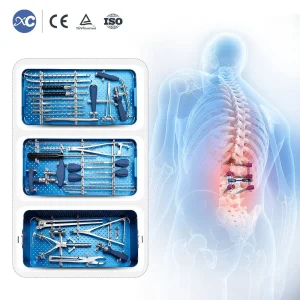
The global spinal fusion implants market is currently undergoing a transformative phase, driven by demographic shifts, technological breakthroughs, and an increasing emphasis on patient-centric outcomes. As the world's population ages, the prevalence of degenerative disc diseases, spondylolisthesis, and spinal stenosis has surged, positioning spinal fusion as a gold-standard surgical intervention.
Current estimates value the global spinal implants market at several billion dollars, with a steady CAGR of over 5%. This growth is not merely numerical but qualitative. Traditionally dominated by major North American and European manufacturers, the industry is seeing a significant shift towards high-quality, cost-effective manufacturing hubs in Asia, particularly China.
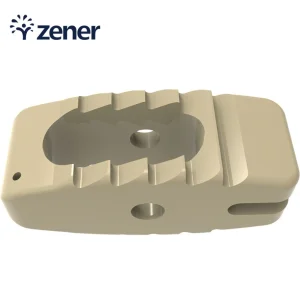
The spinal fusion implant industry is moving toward Personalized Medicine. 3D printing (additive manufacturing) allows factories to create porous titanium structures that mimic human bone architecture, promoting faster osseointegration. This reduces the risk of "subsidence"—a common failure where the implant sinks into the vertebral bone.
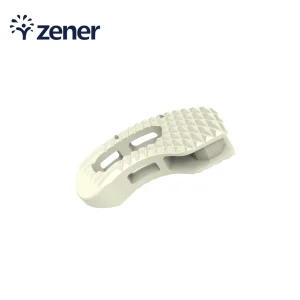
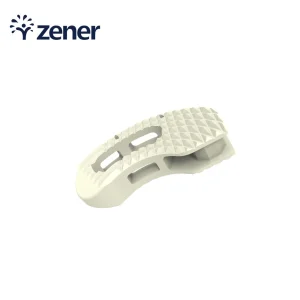
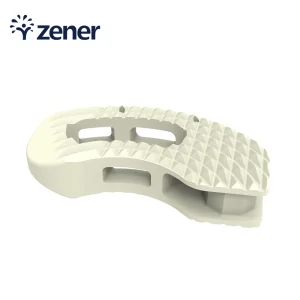
Furthermore, Minimally Invasive Surgery (MIS) is no longer a luxury but a requirement. Implants like the "Banana Lumbar PEEK Cage" are designed specifically for smaller incisions, reducing blood loss and recovery time. Manufacturers are now integrating digital navigation and robotic compatibility into their screw and cage systems, ensuring that surgeons can place implants with sub-millimeter precision.
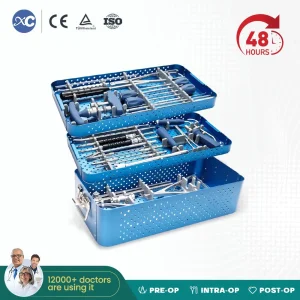
Sustainability and sterile-packaged single-use instruments are also gaining traction. Hospitals are increasingly looking for "ready-to-use" kits that reduce the sterilization burden on the facility and eliminate the risk of cross-contamination.
International medical distributors and hospital procurement departments look for three critical pillars when selecting a Top 10 manufacturer:
Our factory bridges these needs by offering Western-standard engineering with Eastern manufacturing efficiency.
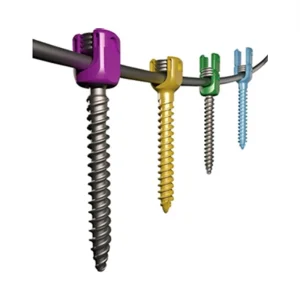
Choosing Beijing Tandir Medical Device Co., Ltd. as your partner provides a competitive edge in the global orthopedic market. We are more than just a supplier; we are an innovation-driven manufacturing powerhouse.
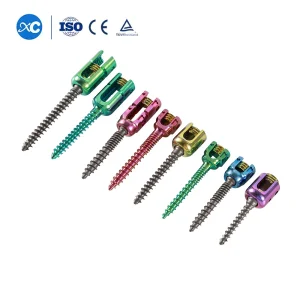
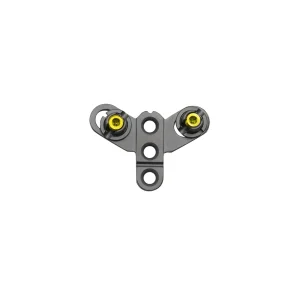
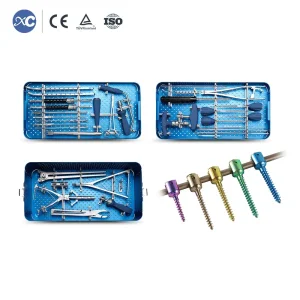
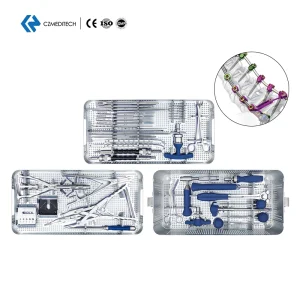
Spinal fusion is applied differently across the globe. In developed markets, the focus is on MIS (Minimally Invasive Surgery) and outpatient-ready systems. In emerging markets, there is a massive demand for durable, high-fixation posterior thoracolumbar systems that can handle complex trauma and deformity corrections. Our product range covers the full spectrum:
Beijing Tandir Medical Device Co., Ltd. was established in 2022. It is a professional supplier of medical equipment, medical consumables and medical equipment, dedicated to providing high-quality solutions for the global market. Its geographical location offers convenient logistics, and it has established close cooperation with factories equipped with advanced production facilities, adhering to international quality standards and emphasizing innovation to meet the constantly changing needs of customers.
Our team combines industry expertise with technical precision, supported by partner factories featuring skilled front-line employees. From R&D to production and quality control, we collaborate closely to ensure products meet CE/FDA requirements. Customer-centric service and timely delivery are core values embedded in our operations.

As we look toward the next decade, the integration of Artificial Intelligence in the manufacturing process is set to redefine quality benchmarks. AI algorithms can now predict material fatigue and optimize the thread design of pedicle screws for different bone densities. This "smart manufacturing" approach ensures that every implant produced at our factory is optimized for the human anatomy.
Moreover, the rise of Augmented Reality (AR) in the OR means that manufacturers must produce implants with high radiolucency and clear markers. Our Titanium-coated PEEK cages are the perfect example of this—combining the mechanical strength of metal with the imaging clarity of polymer, allowing for post-operative monitoring that is far superior to traditional metal cages.