 Tandir Orthopedic Implants
Tandir Orthopedic Implants
Tandir Orthopedic Implants
Why do I still have pain after orthopedic surgery? It is a common question, but it rarely has one simple answer. Pain may reflect normal tissue healing, swelling, muscle guarding, or temporary nerve irritation. Sometimes, however, it signals infection, hardware problems, joint stiffness, poor movement patterns, or complex regional pain syndrome. The timing, location, intensity, and daily triggers matter.
Spine surgeon David Hanscom, MD, has written, “Chronic pain is a disease, not a symptom.” This perspective matters after orthopedic surgery. Persistent pain can become influenced by sleep loss, fear of movement, stress, and nervous-system sensitivity. The original injury may heal, while the pain system remains overprotective.
The picture is rarely neat.
This introduction examines the top 10 reasons pain may continue after orthopedic surgery. It will separate expected discomfort from warning signs that deserve prompt clinical review. A warm, reddened incision with drainage differs from soreness after physical therapy. Sharp pain during one movement differs from constant pain at rest. These details help clinicians assess healing, inflammation, nerve involvement, and mechanical problems.
Recovery also varies between patients. Age, diabetes, smoking, previous pain, medication use, surgical complexity, and rehabilitation can change the experience. No online article can replace an examination or imaging when needed. That limitation is important. A careful explanation should inform patients without creating false certainty.
Persistent pain deserves attention, not dismissal. Yet pain does not automatically prove that surgery failed. Understanding the possible causes can support better questions, safer decisions, and more realistic recovery expectations.
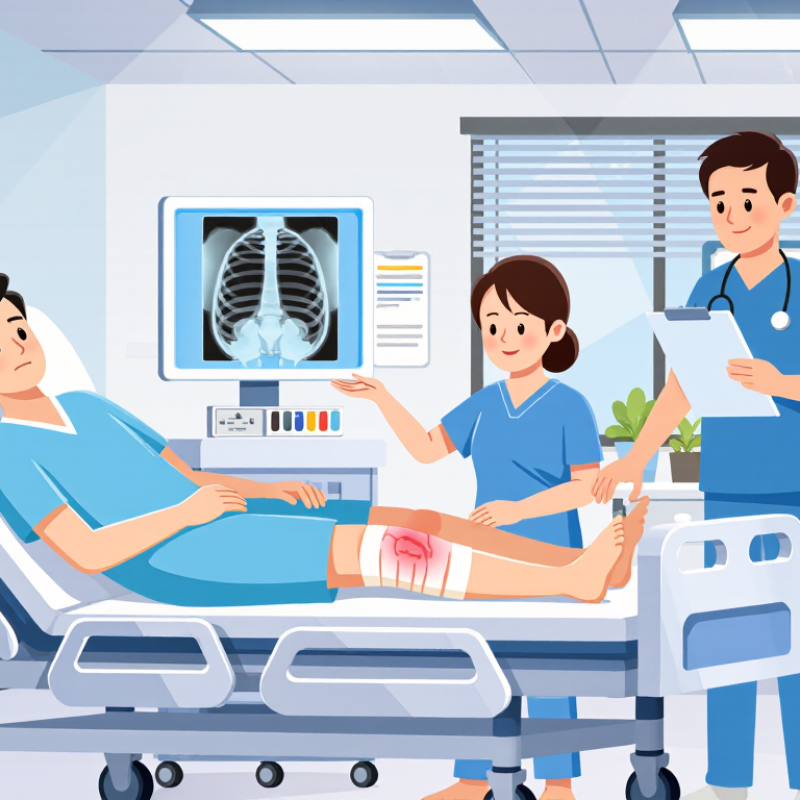
Top 10 Reasons Why Pain Persists After Orthopedic Surgery?
Persistent pain does not always mean the operation failed. The International Association for the Study of Pain defines chronic postsurgical pain as pain lasting at least three months after surgery. A 2019 review in The Lancet reported rates between 10% and 50%, depending on the procedure and patient factors. After total knee replacement, systematic reviews commonly estimate ongoing pain in about one patient out of five. The numbers vary. That uncertainty matters.
Pain may continue because nerves remain irritated, scar tissue restricts movement, or inflammation has not settled. Weak muscles can overload nearby joints. Poor sleep, anxiety, diabetes, smoking, and pre-existing pain may also slow recovery. Infection, implant problems, stiffness, or an unrecognized fracture are less common, but they require prompt assessment. Pain can also become sensitized. The nervous system starts reacting like an alarm with its volume turned too high. That explanation is real, but sometimes oversimplified.
Tips: Keep a simple pain diary. Record location, intensity, swelling, sleep, and activity. Share it with your surgeon or physiotherapist. Seek urgent medical advice for fever, wound drainage, sudden calf swelling, chest pain, new weakness, or rapidly worsening pain. Do not increase medication without guidance. Recovery is rarely linear. A difficult week can follow a good one. I have learned that pain scores alone miss important details, especially function, confidence, and sleep. Recognizing that gap can improve clinical decisions.
| No. | Potential Reason | How It Can Cause Ongoing Pain | Common Clues or Symptoms | Typical Clinical Evaluation | General Management Considerations |
|---|---|---|---|---|---|
| 1 | Normal tissue healing and inflammation | Surgical tissues, bone, muscles, and the joint capsule may remain inflamed while healing. Pain can fluctuate with activity and may gradually improve over weeks or months. | Expected soreness, swelling, stiffness, and pain that slowly decreases rather than steadily worsens. | Review of the surgical timeline, wound examination, range-of-motion assessment, and comparison with expected recovery milestones. | Individualized activity progression, prescribed rehabilitation, ice or elevation when appropriate, and clinician-guided pain relief. |
| 2 | Overuse or insufficient rehabilitation | Too much activity can irritate healing tissues, while too little movement can cause stiffness, weakness, and altered mechanics that increase pain. | Pain increases after exercise or prolonged activity; stiffness or weakness limits function. | Assessment of gait, strength, mobility, exercise technique, activity load, and adherence to the rehabilitation plan. | Adjusting exercise intensity, improving movement technique, balancing rest with activity, and supervised physical therapy when indicated. |
| 3 | Infection | Bacteria can infect superficial or deep tissues, including bone or an implanted joint. Infection may occur early or, less commonly, later after surgery. | Increasing pain, warmth, redness, drainage, wound separation, fever, chills, or new loss of function. Some infections have subtle symptoms. | Urgent examination, blood tests when appropriate, imaging, and sometimes aspiration or tissue sampling for laboratory analysis. | Prompt medical assessment is essential. Treatment may involve antibiotics and, depending on severity, drainage or additional surgery. |
| 4 | Hardware irritation, loosening, or mechanical failure | Plates, screws, rods, anchors, or joint components may irritate nearby tissues, shift, loosen, break, or fail to provide stable fixation. | Localized tenderness, pain with loading, clicking, instability, deformity, or pain that returns after an initial improvement. | Physical examination and appropriate imaging, commonly including plain radiographs; advanced imaging may be needed in selected cases. | Observation may be appropriate for minor irritation, while mechanical problems may require activity modification, hardware removal, revision, or other surgical treatment. |
| 5 | Delayed union, nonunion, or malunion | A fracture or bone fusion may heal slowly, fail to unite, or heal in an abnormal position, producing persistent stress and impaired mechanics. | Deep or load-related pain, tenderness at the bone or fusion site, persistent swelling, deformity, or limited function beyond the expected period. | Serial radiographs and, when necessary, computed tomography or other imaging to evaluate alignment and bone healing. | Treatment depends on the cause and may include nutritional or metabolic optimization, protected weight-bearing, bone stimulation, or revision surgery. |
| 6 | Nerve irritation or nerve injury | Nerves may be stretched, compressed, entrapped by scar tissue, or injured during surgery. Nerve recovery can be slow and incomplete. | Burning, electric-shock pain, tingling, numbness, hypersensitivity, weakness, or pain radiating along a limb. | Detailed neurologic examination; electrodiagnostic testing or imaging may be considered based on timing and symptoms. | Protection of the affected area, targeted rehabilitation, treatment of nerve-related pain, and specialist referral when progressive weakness or significant deficits occur. |
| 7 | Scar tissue and adhesions | Excess or restrictive scar tissue can limit tendon, muscle, nerve, or joint movement and may create friction or localized sensitivity. | Restricted range of motion, pulling sensations, focal tenderness, pain during a particular movement, or soft-tissue tightness. | Examination of scar mobility and joint motion; ultrasound or magnetic resonance imaging may help in selected soft-tissue conditions. | Scar mobilization when healed, stretching, progressive strengthening, manual therapy, and occasionally procedural or surgical treatment. |
| 8 | Complex regional pain syndrome | An abnormal pain and autonomic response after injury or surgery can cause pain that is disproportionate to the original tissue injury. | Severe burning pain, marked sensitivity, swelling, temperature or color changes, sweating changes, and stiffness. | Clinical assessment using recognized diagnostic features; other causes such as infection, vascular problems, or nerve compression must be excluded. | Early coordinated care may include graded rehabilitation, desensitization, psychological support, and specialist pain management. |
| 9 | Joint stiffness, muscle weakness, or altered biomechanics | Reduced motion and weakness can shift loads to nearby muscles, tendons, joints, or the opposite limb, maintaining pain even when the original repair is intact. | Limited motion, limp, reduced strength, compensatory movement, fatigue, or pain in adjacent areas. | Functional examination of the operated and neighboring regions, including strength, flexibility, alignment, gait, and movement patterns. | Structured rehabilitation focused on mobility, strength, balance, joint protection, and gradual return to normal activities. |
| 10 | Persistent pain sensitization or another pain source | The nervous system may remain unusually sensitive after the original injury has healed. Pain may also come from the spine, a nearby joint, tendon, or a separate medical condition. | Pain is widespread, variable, disproportionate, or poorly localized; symptoms may persist despite satisfactory structural healing. | Comprehensive history and examination, review of imaging, medication assessment, and evaluation for spinal, joint, inflammatory, or systemic causes. | Multimodal care may combine graded activity, sleep and mood support, education, physical therapy, and carefully selected medical treatment. |
Persistent or worsening pain should be assessed by the operating clinician or another qualified healthcare professional. Urgent evaluation is appropriate for fever, increasing redness or drainage, new severe swelling, chest pain, shortness of breath, sudden limb weakness, or a cold, pale, or unusually painful extremity.
Soreness, swelling, and tightness may continue for weeks. Chronic postsurgical pain generally means pain lasting at least three months. Recovery is rarely linear.
Not necessarily. Irritated nerves, scar tissue, weak muscles, or slow inflammation may explain continuing pain. The cause is sometimes unclear at first.
Burning, tingling, numbness, or electric-shock sensations near the incision can involve irritated nerves. These sensations should be discussed with a qualified clinician.
Exercises may progress too quickly or overload the surgical area. Excessive rest can also weaken muscles. A rehabilitation plan needs adjustment, not guesswork.
Seek prompt help for fever, wound drainage, spreading redness, or rapidly worsening pain. Sudden calf swelling, chest pain, or new weakness also needs urgent attention.
Yes. Scar tissue can restrict movement, while joint stiffness may make simple actions feel sharply limited. Gentle movement may help, but severe pain should not be forced.
Keep a simple diary. Record pain location, intensity, swelling, sleep, activity, and medication response. A short note can reveal patterns that pain scores miss.
Do not change the dose without medical guidance. Medication changes may hide important symptoms or create new problems. A difficult week deserves reassessment.
The nervous system may react like an alarm with its volume turned too high. This is a real possibility, but it can be an incomplete explanation. Physical causes still require checking.
Pain after orthopedic surgery does not always disappear as soon as the incision heals. In many cases, discomfort is part of normal recovery caused by tissue inflammation, muscle weakness, stiffness, nerve sensitivity, or gradual bone and joint healing. However, ongoing pain may also be linked to infection, poor alignment, implant or hardware problems, nerve irritation, scar tissue, or an underlying condition that was not fully resolved. The question “Why do I still have pain after orthopedic surgery” can only be answered by considering the type, location, intensity, and timing of the symptoms.
Recovery may be affected by the original diagnosis, surgical complexity, rehabilitation progress, activity level, sleep, and overall health. Mild pain that steadily improves is often expected, while worsening pain, new swelling, redness, fever, drainage, numbness, weakness, or loss of function may require prompt medical evaluation. A healthcare professional can review the surgical history, perform an examination, and recommend appropriate testing and treatment to support a safer recovery.
