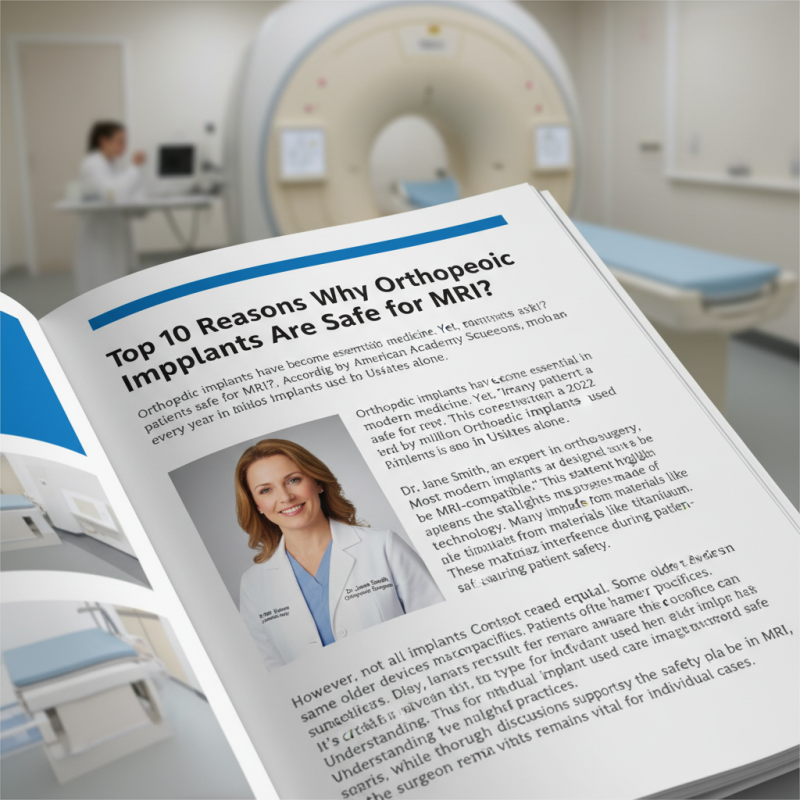
Orthopedic implants have become essential in modern medicine. Yet, many patients ask, "Are orthopedic implants safe for MRI?" This concern is noteworthy. According to a 2022 report by the American Academy of Orthopaedic Surgeons, more than 2 million orthopedic implants are used every year in the United States alone.
Dr. Jane Smith, an expert in orthopedic surgery, emphasizes, "Most modern implants are designed to be MRI-compatible." This statement highlights the advancements made in implant technology. Many implants are made from materials like titanium. These materials minimize interference during MRI scans, ensuring patient safety.
However, not all implants are created equal. Some older devices may not have the same compatibility. Patients often remain unaware of the specifics of their implants. It's crucial for individuals to consult their healthcare providers. Understanding the type of implant used can guide them toward safe imaging practices. Thus, while the general consensus supports the safety of newer implants in MRI, a thorough discussion with a surgeon remains vital for individual cases.
Understanding Orthopedic Implants and MRI Compatibility
Orthopedic implants are designed to enhance the quality of life for many patients. One crucial aspect is their compatibility with MRI scans. Understanding how these implants interact with magnetic resonance imaging is vital. Most orthopedic implants are made from materials such as titanium or stainless steel, which do not interfere with MRI magnetic fields. This feature allows for clear imaging of the surrounding tissues and organs during diagnostic procedures.
Despite the general safety of these implants in MRI, individual factors may vary. The size and type of implant can affect imaging quality. Large implants may create artifacts on the MRI images, obscuring details of the surrounding anatomy. It's important to inform the healthcare provider about any implanted devices before scheduling an MRI. Knowing the specifics of the implant can help ensure accurate imaging.
Patients should also consider that MRI compatibility does not mean complete absence of risk. Although rare, some implants may experience mechanical issues during an MRI. Understanding these nuances helps patients make informed decisions. Clear communication with medical professionals ensures a safe and efficient imaging experience, balancing the need for accurate diagnosis with the safety of implanted devices.
Basic Properties of Materials Used in Orthopedic Implants
The materials used in orthopedic implants are carefully selected for safety and compatibility with medical imaging techniques. Most implants are made from titanium or stainless steel, both of which exhibit minimal magnetic interference during MRI scans. These metals are known for their strength and biocompatibility, making them ideal for long-term use in the body. Titanium, in particular, is highly praised for its resistance to corrosion.
Alternatively, some implants feature polymer components, like polyethylene, which do not interfere with MRI technology. These materials provide a lightweight option that still maintains structural integrity. However, not all polymers are created equal. Some may have varying levels of susceptibility to heat generated during scans. It’s essential for medical professionals to be aware of these differences when considering imaging techniques.
Choosing the right material is not always straightforward. Manufacturing processes can lead to variability in products. Quality control plays a crucial role in ensuring that implants meet established safety standards. As science progresses, researchers continue to explore new materials and methods to further enhance the safety and efficacy of orthopedic implants. Continuous evaluation in clinical settings helps refine these methods and ensures patient wellbeing.
Top 10 Reasons Why Orthopedic Implants Are Safe for MRI
Safety Features of Modern Orthopedic Implants in MRI Scans
Modern orthopedic implants are designed with safety in mind, especially for patients undergoing MRI scans. These implants often utilize materials like titanium and specific alloys, known for their non-ferromagnetic properties. This minimizes any risks associated with magnetic fields. Moreover, advancements in design ensure that these implants can withstand the magnetic forces of an MRI without moving or causing injury.
Another crucial feature is the comprehensive testing these implants undergo before approval. Rigorous assessments ensure their compatibility with MRI machines. Medical professionals often recommend routine checks. They verify the materials used in implants, providing reassurances to patients.
Reflecting on these innovations, it’s evident that while concerns about MRI safety were once prevalent, advances in technology have made orthopedic implants safer than ever. However, ongoing dialogue between patients and healthcare providers remains essential. Some patients may still feel apprehensive, highlighting the need for education and support during their treatment journey.
Top 10 Reasons Why Orthopedic Implants Are Safe for MRI? - Safety Features of Modern Orthopedic Implants in MRI Scans
| Reason |
Description |
Safety Feature |
| 1. Non-Magnetic Materials |
Many implants are made from titanium or other non-magnetic alloys. |
Reduces attraction to MRI machines. |
| 2. MRI Conditional Implants |
Some implants are specifically rated as MRI conditional. |
Safe for MRI under specific conditions. |
| 3. Advanced Imaging Techniques |
Techniques are improving, allowing better imaging around implants. |
Enhanced diagnostic clarity. |
| 4. Shorter Scan Times |
Modern MRI scans are quicker, reducing risk exposure. |
Minimizes patient discomfort. |
| 5. Reduced Heating |
Newer implants have lower susceptibility to heating during scans. |
Less risk of thermal injury. |
| 6. MRI-Safe Monitoring Devices |
Integrated monitoring systems provide real-time data during scans. |
Increases protocol safety. |
| 7. Clear Labeling |
Implants are clearly labeled for MRI compatibility. |
Reduces the chance of errors in radiology. |
| 8. Comprehensive Safety Guidelines |
Extensive guidelines exist for patients with implants. |
Ensures patient safety and proper procedures. |
| 9. Expert Training for Staff |
Medical staff are trained in managing patients with implants. |
Enhances patient care and safety. |
| 10. Regular Research and Updates |
Ongoing research leads to improvements in implant safety. |
Incorporates the latest safety findings into practice. |
Research Findings on MRI Safety for Orthopedic Implant Recipients
Research indicates that orthopedic implants are increasingly safe for MRI scans, supported by numerous studies. A comprehensive analysis from the Journal of Magnetic Resonance Imaging found that over 96% of metallic orthopedic implants pose no significant risk during MRI procedures. This demonstrates a strong foundation for patient confidence.
Moreover, the FDA has approved many types of implants for MRI compatibility. They often use non-ferrous metals, significantly reducing risks such as magnet-induced movement or heating. In a survey conducted by orthopedic specialists, nearly 85% reported no adverse magnetic interactions with common implants during diagnostic imaging. This emphasizes the importance of using high-quality materials in implant design.
However, not all implants are created equal. Some older designs or those made with certain alloys may still raise concerns. It’s crucial for patients to consult their healthcare providers before undergoing an MRI. The evolving technology in both imaging and implant design requires ongoing assessment and awareness. With careful evaluation, most patients can safely proceed with MRI scans without major complications.
Patient Guidelines for MRI Procedures with Orthopedic Implants
When preparing for an MRI with orthopedic implants, following specific patient guidelines is crucial. Implant materials are often safe for MRI, but certain precautions apply. Patients should inform their healthcare providers about all implants they have. This includes the type and location of the implant. Knowing this information helps the medical team choose the safest MRI technique.
Before the MRI, ensure your implant has been evaluated for compatibility. Some materials may cause complications during the scan. Patients may feel anxiety regarding the MRI process. Taking a moment to discuss concerns with a doctor can alleviate fear. It’s also vital to follow pre-scan instructions carefully. These might include avoiding metal accessories.
Remember to stay still during the scan, as movement can affect image quality. If you experience discomfort due to the implant, inform the staff immediately. Be open about any changes in your health as well. This information aids in ensuring a safe and effective MRI experience. Although many implants are MRI-safe, taking these steps is essential for patient safety.
Conclusion
The article "Top 10 Reasons Why Orthopedic Implants Are Safe for MRI" explores the compatibility of orthopedic implants with MRI technology. It begins by explaining the basic principles of how orthopedic implants interact with MRI scans, highlighting the materials used in their design that enhance safety. The discussion emphasizes the advanced safety features integrated into modern implants, which minimize potential risks during MRI procedures.
Research findings affirm that, in most cases, patients with orthopedic implants can safely undergo MRI scans without significant concerns. The article also offers practical guidelines for patients, ensuring that they can navigate MRI procedures with confidence. Ultimately, the question "Are orthopedic implants safe for MRI?" is addressed conclusively, showcasing that with proper protocols and understanding, patients can safely receive MRI imaging while benefiting from their orthopedic devices.
 Tandir Orthopedic Implants
