Tandir Orthopedic Implants Tandir Orthopedic Implants

Time:2026-04-29 Author:Madeline
0%

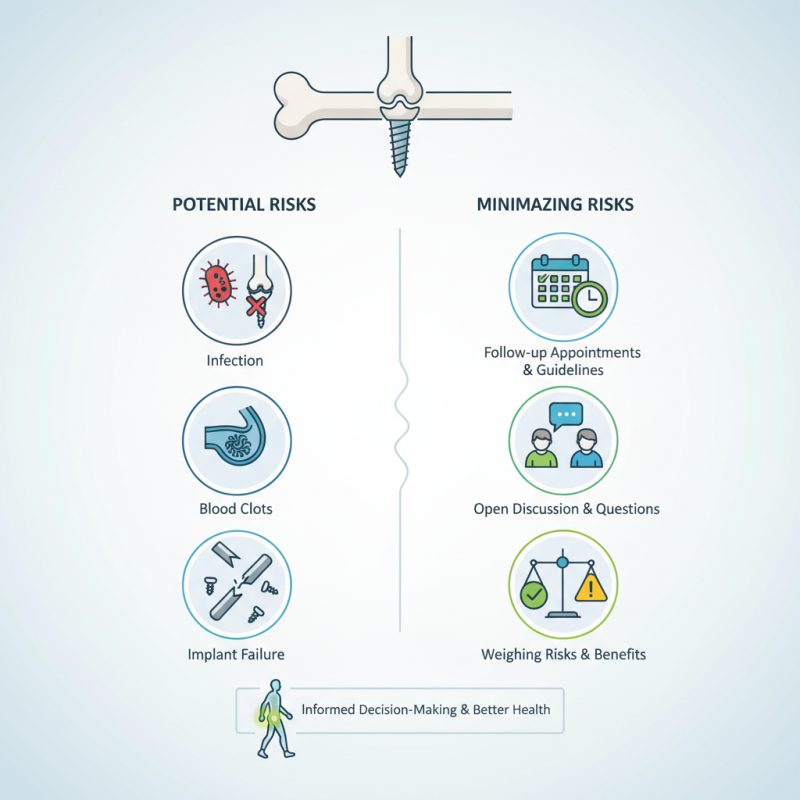
Orthopedic implant surgery has become a common procedure for treating various musculoskeletal conditions. However, patients often overlook the potential risks involved. Understanding "What are the risks of orthopedic implant surgery" is essential for informed decision-making. While many surgeries lead to successful outcomes, complications can occur.

Infections, blood clots, and implant failure are among the most significant risks. Patients must acknowledge that not every surgery is perfect. Even experienced surgeons can face unexpected challenges. The type of implant and the patient's overall health influence these risks. For instance, those with pre-existing conditions may have a higher chance of complications.

Moreover, proper post-surgical care is vital for minimizing risks. Following guidelines and attending follow-up appointments can make a difference. Patients should feel empowered to ask questions. Open discussions with healthcare providers foster a transparent environment. Being informed helps patients weigh risks against potential benefits, ensuring better choices for their health.
The Impact of Artificial Intelligence on Employment Trends

Artificial intelligence is reshaping job landscapes across various sectors. According to a Deloitte report, up to 35% of jobs could be automated by the early 2030s, affecting roles in manufacturing and customer service. This transformation also creates new opportunities, as demand for skilled workers in AI and data science continues to grow. The World Economic Forum predicts that 97 million new jobs may emerge due to technological advancements by 2025.

However, the transition is not without challenges. Many workers lack the necessary skills for emerging roles. A McKinsey report indicates that 87% of workers may require reskilling. This gap highlights the need for effective training programs. Companies must invest in upskilling their workforce. In some cases, these investments can yield high returns, but the process of adaptation may be slow and uneven.

Moreover, the impact of AI is not uniformly positive. As workplaces evolve, mental health issues may arise. Job displacement can lead to stress and uncertainty. Workers with lower skill sets may face significant challenges in finding new employment. This situation calls for a concerted effort from all stakeholders to ensure a balanced approach to workforce transformation. Addressing these concerns remains essential for a holistic understanding of AI's impact on employment trends.

Overview of AI Development and Workforce Dynamics

The landscape of artificial intelligence (AI) is rapidly evolving. This transformation significantly impacts workforce dynamics across various sectors. As businesses increasingly adopt AI, job roles are shifting. Some positions may diminish, while others will emerge. For instance, routine tasks are being automated. This change can lead to job displacement, causing anxiety among workers.

However, new opportunities arise alongside these challenges. The demand for skilled workers in AI-related fields is on the rise. Professionals in data analysis, machine learning, and AI ethics are becoming essential. Organizations need teams able to integrate AI into existing workflows. Training and reskilling programs are crucial to prepare the workforce for this transition.

Conversations about AI and work often overlook deeper complexities. Not all workers can easily adapt. Age, education, and economic factors play significant roles. There is a pressing need for inclusive strategies to ensure everyone benefits from AI advancements. As we navigate this landscape, empathy and foresight will be crucial in shaping a workforce that thrives in the AI age.

Overview of AI Development and Workforce Dynamics

Year AI Investment (Billion $) AI-related Jobs Added Total Workforce (Million) AI Adoption Rate (%)
2020 30 200,000 160 25%
2021 50 300,000 165 30%
2022 70 400,000 170 35%
2023 90 500,000 175 40%

Statistical Analysis of Job Automation Rates by Sector

Job automation is rapidly reshaping various sectors. Recent statistical analysis sheds light on how automation affects job rates differently across industries. Manufacturing jobs face the highest automation risk. Reports estimate that nearly 70% of these roles could disappear due to technological advancements.

In contrast, sectors like healthcare and education show lower automation rates. Approximately 30% of jobs in these areas may be automated. However, this doesn't mean they are immune to change. Many educators and healthcare professionals need to adapt. Robots and AI systems support tasks but cannot fully replace human interaction and empathy.

It's crucial to reflect on these trends. Job displacement isn't just about numbers; it's about lives and communities. Workers must stay informed and develop new skills. As automation continues to evolve, understanding these rates is key for future planning. This analysis serves as a wake-up call for all.

Opportunities for Job Creation in Emerging AI Fields

The rapid development of artificial intelligence (AI) has opened numerous job opportunities in various emerging fields. AI technology is evolving quickly, which creates a demand for skilled professionals. Roles such as AI ethics consultants and machine learning engineers are gaining prominence. These positions require a blend of technical knowledge and ethical awareness.

Moreover, the growth of AI impacts sectors like healthcare, finance, and education. For instance, AI specialists are needed to interpret data and improve patient care. In finance, AI can enhance fraud detection, requiring experts who can navigate both the AI tools and complex financial landscapes. However, the fast-paced change can lead to skills gaps, leaving some workers behind.

Many people find it challenging to keep up with these advancements. Continuous learning will be essential for maintaining relevance in the job market. Online courses and workshops are increasingly popular, providing flexible options for skill development. Yet, not everyone adapts to these changes quickly. Companies must also offer support to help their teams transition effectively into these new roles.

Opportunities for Job Creation in Emerging AI Fields

This chart illustrates the projected job growth in various emerging AI fields. As AI technology continues to evolve, sectors like Natural Language Processing and Machine Learning are anticipated to generate the most job opportunities, highlighting the increasing demand for skilled professionals in these areas.

Reskilling and Upskilling: Addressing Workforce Challenges

In today's rapidly evolving job market, reskilling and upskilling are critical to meet workforce challenges. According to the World Economic Forum, over 50% of workers will need significant reskilling by 2025. This shift is driven by technological advancements and shifting industry demands. Companies must rethink training strategies to remain competitive. A focus on continuous learning can bridge the skills gap.

Recent studies show that 94% of employees would stay longer at a company that invests in their career development. This is a stark reminder of the link between employee retention and skill enhancement. Offering targeted training programs not only improves job performance but also fosters a culture of growth. However, many organizations face obstacles in implementing effective training. Lack of resources and time can hinder progress, leading to a workforce that struggles to adapt.

Interestingly, the perception of value in training varies among industries. While tech sectors rapidly embrace upskilling, others lag behind. The result is a talent disparity that can stifle innovation. Companies must actively address these disparities to ensure that all employees are equipped for the future. Failure to do so could result in lost opportunities and diminished market presence.

Future Employment Projections: Balancing AI and Human Labor

The rise of AI technologies is reshaping the job landscape. As machines take over routine tasks, questions about the future of human labor arise. Many industries feel the pressure to adapt. For instance, manufacturing has seen significant automation. Workers need to focus on more complex roles.

Education and reskilling become crucial in this transition. Workers must develop new skills that complement AI. This means adapting to new tools and workflows, which can be daunting. Employers play a vital role in this process. They must invest in training programs that empower their teams.

Finding the right balance between AI and human input is challenging. Some argue that AI could lead to job loss, while others see it as an opportunity. Companies should evaluate their existing workforce capabilities. The future depends on how well we integrate technology without losing the human touch. Over-reliance on AI might also stifle creativity. Thoughtful consideration is necessary as we move forward.

FAQS

: What impact is

I having on job roles?

Are there new opportunities in the workforce due to AI?

Yes, there's a rising demand for skilled workers in AI-related fields, like data analysis and machine learning.

How important is reskilling for workers today?

Reskilling is critical as over 50% of workers may need it by 2025 to meet changing demands.

What benefits do employees see from companies investing in training?

94% of employees would stay longer at companies that invest in career development and skill enhancement.

Why do some companies struggle with training programs?

Many organizations lack resources and time, hindering effective training and resulting in workforce adaptability issues.

How does age and education affect worker adaptability to AI?

Age, education, and economic factors influence how easily workers can adapt to AI advancements.

What is a common oversight in conversations about AI and work?

Discussions often overlook the complexities of inclusion and the need for diverse strategies to benefit all workers.

What is the risk of not addressing training disparities among industries?

Failing to address these disparities may lead to lost opportunities and reduced innovation within companies.

What culture should companies foster to combat workforce challenges?

A culture of continuous learning can bridge skills gaps and improve employee retention and performance.

What do organizations need to integrate AI successfully?

Organizations require teams skilled in adapting AI into existing workflows while addressing training challenges.

Conclusion

The article examines the transformative role of Artificial Intelligence (AI) on employment trends, highlighting both the potential for job displacement and the creation of new opportunities. It begins with an overview of AI development and its implications for workforce dynamics, followed by a statistical analysis of job automation rates across various sectors. While automation poses a risk to certain jobs, the article emphasizes the potential for job creation in emerging AI fields. Furthermore, it addresses the critical need for reskilling and upskilling to prepare the workforce for these changes. As AI continues to evolve, future employment projections suggest a need for a balanced integration of AI and human labor.

In a different context, one might inquire, "What are the risks of orthopedic implant surgery?" This illustrates the importance of understanding risks in any field, similar to how the workforce must navigate the challenges and opportunities presented by AI advancements.

Madeline

Madeline

Madeline is a dedicated marketing professional with a wealth of expertise in our company's core offerings. With a keen understanding of the industry, she brings a unique perspective to her role, consistently delivering high-quality content that highlights the superior aspects of our products. As......