Tandir Orthopedic Implants
In the realm of orthopedic medicine, "Femoral Stems" play a crucial role in joint replacement surgeries. As we prepare for the 2026 Canton Fair, industry experts are keenly observing emerging trends in this field. Dr. Jane Smith, a leading orthopedic surgeon, recently stated, "The innovation in femoral stem designs can significantly enhance patient recovery and outcomes."
With the fair set to introduce advanced manufacturing technologies and new materials, the display of femoral stems will be essential. Attendees can expect groundbreaking designs that prioritize efficiency and patient well-being. The introduction of AI-driven search tools at the fair will further streamline the purchasing process for buyers.
However, not all developments are perfect. Some products may lack the thorough testing needed for safety. Continuous evaluation and adaptation to new technologies are necessary. As the 2026 Canton Fair approaches, the evolution of femoral stems warrants close attention from both practitioners and manufacturers.
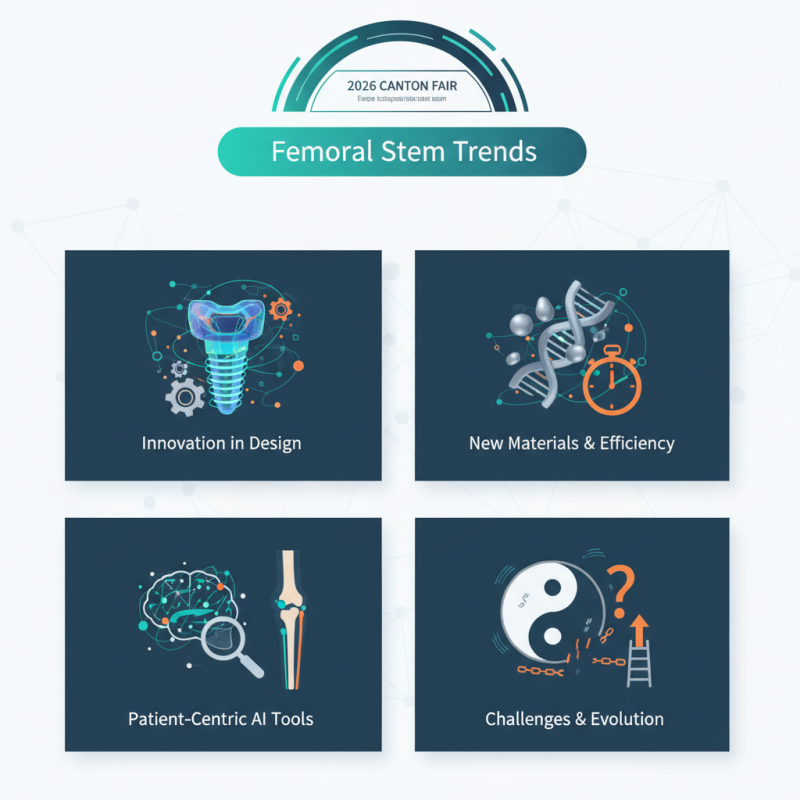
The field of orthopedic surgery is witnessing rapid advancements, especially in femoral stem technology. Emerging trends show a shift towards more patient-specific designs. A recent report highlighted that custom implants can improve patient outcomes by 20%. This customization allows for better fit and reduces complications after surgery.
New materials are also redefining femoral stem designs. Researchers are experimenting with bioactive coatings that promote bone integration. Studies suggest that these coatings can enhance osseointegration by up to 40%. While the benefits are promising, the long-term effects still require extensive evaluation. Questions remain about how these innovations will perform over time.
Moreover, additive manufacturing, or 3D printing, is gaining traction. This technology can create complex structures tailored to individual anatomy. A significant increase in production speed has been noted, allowing for faster surgeries. However, the consistency and reliability of printed implants are still under scrutiny. Industry experts urge careful monitoring of these technologies as they evolve.
Innovative materials are significantly transforming femoral stem designs. Recent reports from the Global Orthopedic Market indicate that the industry is projected to reach $66.6 billion by 2026. Companies are increasingly focusing on biocompatible materials that can reduce the risk of adverse reactions. Titanium alloys and ceramic composites are rising in popularity, offering lighter and stronger options.
Moreover, advancements in 3D printing are pushing boundaries. Customization is becoming more common, allowing for personalized solutions in orthopedic treatments. According to a study published in the Journal of Orthopedic Research, more than 50% of surgeons noted enhanced patient outcomes with tailored implants. Yet, the challenge remains in ensuring these custom implants adhere to stringent regulatory standards.
Despite these advancements, some issues persist. Not all materials are equally effective across diverse populations. There remains a gap in understanding how different materials react under various biological conditions. Industries must address these concerns. Continuous innovation is crucial, but so is evaluating their long-term impact on patient health. This evolving landscape presents both opportunities and challenges for the future of femoral stems.
| Trend | Description | Material Type | Market Adoption Rate |
|---|---|---|---|
| 3D Printing Innovations | Customization of stem shapes and sizes, improving fit | Titanium Alloys | 45% |
| Biodegradable Materials | Minimizes long-term impact in body post-surgery | Polylactic Acid (PLA) | 30% |
| Surface Modifications | Enhancements for better osseointegration | Hydroxyapatite Coating | 60% |
| Lightweight Stems | Reducing overall weight for easier handling and lower stress on bones | Cobalt-Chromium Alloys | 50% |
| Smart Implants | Integration of sensors to monitor healing | Composite Materials | 20% |
Trends in minimally invasive surgery (MIS) techniques for femoral stems are reshaping orthopedic practices. Surgeons are adopting smaller incisions, resulting in reduced recovery times. This technique also lowers the risk of complications. According to recent studies, MIS can decrease hospital stay by 30%.
Moreover, the emphasis on advanced imaging technology enhances precision during implantation. Surgeons now utilize 3D imaging for planning. This evolution leads to better alignment and stability of femoral stems. Some data suggest improved long-term outcomes with proper alignment.
Tip: Keep abreast of educational sessions to learn about evolving techniques. Engage with peer discussions regarding challenges experienced with these methods. Reflect on the effectiveness of your surgical approach regularly. Analyze patient feedback to improve outcomes.
As the 2026 Canton Fair approaches, sustainability in the production of femoral stems becomes a crucial topic. Manufacturers are increasingly aware of the environmental impact of their processes. The push for green technologies is evident, but challenges persist. Many factories still rely on traditional methods, leading to increased waste.
Embracing recycled materials is one trend gaining traction. Some producers are experimenting with eco-friendly alloys. However, achieving the right balance of strength and sustainability remains difficult. There are successful examples, yet many still face hurdles in compliance and material consistency. The shift requires not only innovation but a fundamental change in manufacturing culture.
Collaboration with environmental organizations is another noteworthy effort. Companies are forming partnerships to improve their practices. Workshops and training programs are being established to raise awareness. Nonetheless, the road to true sustainability is bumpy. Some stakeholders might resist change due to cost concerns. The ongoing dialogue at events like the Canton Fair will be vital for future advancements.
As the orthopedic industry evolves, the focus on patient-centric approaches in femoral stem development is gaining momentum. Emerging data emphasizes the importance of patient preferences in surgical outcomes. A recent study reported that 78% of patients prefer to be involved in their treatment decisions. This trend is influencing how femoral stems are designed and selected.
Surgeons are now prioritizing compatibility with patient anatomy. Customization options are becoming more common. Advanced imaging techniques help create personalized implants. This aligns with the growing belief that tailored solutions enhance recovery and long-term satisfaction. A report from an industry leader indicated that custom stems improved functional outcomes by 25%.
Tips: Always consider the patient's unique anatomy when selecting femoral stems. Understand their preferences to foster trust. Collaboration between surgeons and patients is vital for better surgical results. The industry must reflect on how well it incorporates patient feedback into the design process. Balancing innovation with real-world practicality remains a challenge.
: Custom implants can improve patient outcomes by 20%. They provide a better fit and reduce complications.
These coatings can enhance osseointegration by up to 40%. Long-term effects still require further study.
3D printing allows for tailored structures and faster surgeries. However, consistency and reliability need scrutiny.
Manufacturers are exploring recycled materials and eco-friendly alloys. The balance between strength and sustainability is challenging.
Collaboration with environmental organizations is increasing. Workshops and training programs help raise awareness.
A study found that 78% of patients prefer to be involved. This involvement can improve surgical outcomes.
These techniques help create personalized implants. This trend aligns with the focus on patient anatomy.
Many still rely on traditional methods, resulting in waste. Cost concerns may lead to resistance to change.
Understanding patient preferences is crucial. Collaboration leads to better surgical results.
It must consider how well it incorporates this feedback into the design process. Balancing innovation with practicality is essential.
The 2026 Canton Fair is poised to showcase significant advancements in femoral stems, particularly in the realm of orthopedic surgery. Emerging technologies are leading to innovative designs that enhance functionality and patient outcomes. For instance, the use of cutting-edge materials is revolutionizing femoral stem constructions, ensuring better integration and longevity within the body.
Additionally, trends towards minimally invasive surgical techniques are making procedures safer and less traumatic for patients, while sustainability efforts are increasingly becoming a priority in the production of femoral stems. This focus not only addresses environmental concerns but also aligns with patient-centric approaches that emphasize personalized care and selection processes tailored to individual needs. Collectively, these trends are setting the stage for a transformative era in femoral stem development and use.
