 Tandir Orthopedic Implants
Tandir Orthopedic Implants
Tandir Orthopedic Implants
After orthopedic implant surgery, recovery is more than waiting for pain to disappear. A new hip, knee, shoulder, or ankle implant needs stable healing around the joint and surrounding tissues. Early twisting, heavy lifting, high-impact exercise, or unsafe bathing may strain the repair. The key question is not simply, “What can you not do after orthopedic implant surgery?” It is also, “When can each activity safely return?”
Professional guidance supports this cautious approach. The American Academy of Orthopaedic Surgeons advises gradual activity progression after joint replacement, with exercises selected by the surgical team and rehabilitation professionals. The Centers for Disease Control and Prevention’s surgical-site infection guidance also emphasizes protecting the incision, maintaining hygiene, and monitoring warning signs. These recommendations matter because infection, dislocation, falls, blood clots, and implant loosening can delay recovery. A painful stumble beside the bathtub can create more damage than a missed workout.
Registry data add important context. The American Joint Replacement Registry tracks millions of hip and knee procedures and uses long-term outcomes to improve implant care. Its reports show why follow-up and patient-specific monitoring remain essential. However, no report can predict every person’s recovery. Age, bone quality, surgical technique, implant design, muscle strength, and other health conditions all influence restrictions.
Some advice may feel overly cautious. It can also change after examination. A patient may walk safely with a cane while still avoiding stairs, deep squats, or sudden pivots. Recovery is rarely perfectly linear. Swelling may return after a busy day, and that does not always mean the implant has failed. Still, new fever, drainage, calf swelling, chest pain, severe pain, or sudden loss of function requires prompt medical attention. This article explains the reasoning behind common restrictions and encourages readers to confirm every activity plan with their orthopedic surgeon or physical therapist.
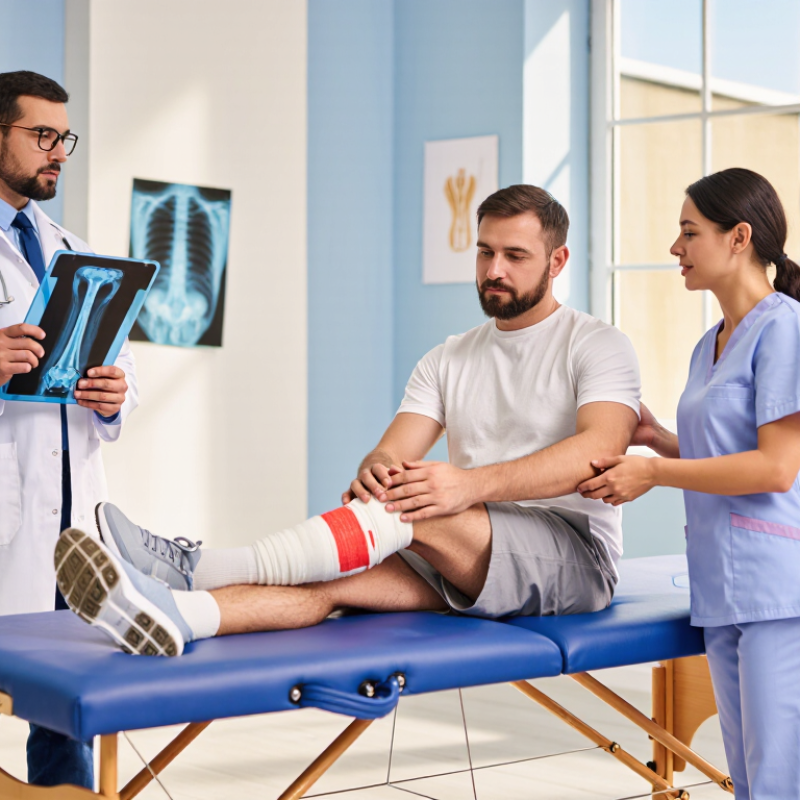
After orthopedic implant surgery, movement is not automatically dangerous. The load, angle, and timing matter. Impact can send sudden force through the implant and surrounding bone. A hard landing, jump, or missed step may stress healing tissues before they regain strength. Early in recovery, even a short stumble can create concern.
Twisting is another problem. Your foot may stay planted while your knee or hip rotates. That motion can strain muscles, healing tissue, and implant interfaces. Deep flexion creates a different challenge. Sitting on a very low chair or crouching to reach a drawer can sharply increase joint pressure. Some patients also place the operated joint in an awkward angle without noticing. That is easy to underestimate.
Not every movement causes damage. Still, caution has value. Surgical approach, implant position, bone quality, and healing speed all change the risk. A motion that feels comfortable may still exceed your current restrictions. Rehabilitation professionals usually teach safer ways to turn, sit, and pick up objects. Follow their specific instructions rather than copying another patient’s routine. Pain, a new clicking sensation, swelling, instability, or sudden loss of function deserves prompt medical attention. Recovery advice can feel overly cautious, and sometimes it may be adjusted. Do not adjust it alone.
| Activity or Motion | Primary Mechanical Load | Why It May Increase Risk | Potential Concern | General Safer Approach |
|---|---|---|---|---|
| Running, jumping, or high-impact aerobics | Repeated impact and rapid loading through the implant and surrounding bone | Peak forces can be substantially higher than during ordinary walking, especially during landing or abrupt changes in speed. | Pain, bone stress, loosening over time, polyethylene or other bearing wear, and falls | Begin with supervised walking and progress to low-impact exercise such as stationary cycling or swimming when cleared. |
| Pivoting, sudden turning, or cutting movements | Rotational and shear forces across the joint and implant-bone interface | A planted foot combined with rapid body rotation can create torque that the healing tissues may not yet tolerate. | Soft-tissue strain, instability, falls, or disruption of early healing | Turn with several small steps rather than twisting over a fixed foot. |
| Deep hip flexion or low squatting | Large joint angles, increased contact pressure, and tension on healing soft tissues | For some hip replacements, certain combinations of deep flexion, adduction, and rotation can increase instability risk. | Dislocation risk in selected hip procedures, pain, or difficulty returning to standing | Use raised seating and avoid forcing the hip beyond the prescribed range until cleared. |
| Kneeling or prolonged deep knee bending | High flexion angles and concentrated pressure around the front of the knee | The motion may compress sensitive tissues and can be uncomfortable while strength, swelling, and range of motion are still recovering. | Anterior knee pain, swelling, balance loss, or difficulty rising safely | Use a chair, raised surface, or long-handled tool; return to kneeling only if specifically approved. |
| Heavy lifting, pushing, or pulling | Higher joint reaction forces and additional load through the trunk and operated limb | Compensatory posture, breath-holding, or poor lifting technique can increase force and reduce balance. | Pain flare, muscle strain, loss of balance, or excessive stress during early healing | Use light loads, keep objects close to the body, avoid twisting, and follow individualized lifting limits. |
| Uneven ground, ladders, or slippery surfaces | Sudden balance corrections, unexpected impact, and fall-related forces | Strength, proprioception, and reaction time may be reduced after surgery or while using an assistive device. | Falls, fractures around the implant, wound injury, or acute joint instability | Choose level, well-lit surfaces, wear supportive footwear, and use prescribed support until gait is steady. |
| Contact sports or activities with collision risk | Unpredictable impact, torque, and rapid changes in direction | A collision or awkward landing can exceed normal design loads and may be difficult to control. | Traumatic injury, dislocation in susceptible joints, fracture, or accelerated wear | Prefer controlled, low-impact activities and discuss sport-specific return criteria with the care team. |
| Repeated stair climbing or steep inclines early in recovery | Increased muscle demand and greater joint loading than level walking | Weakness and limited control may cause compensatory movements or unsafe stepping. | Pain, swelling, fatigue, or falls | Use handrails, take one step at a time when advised, and increase distance gradually. |
No. Risk depends on force, angle, timing, and healing progress. A hard landing is different from gentle walking. Follow your personal restrictions.
Your foot may stay planted while your knee or hip rotates. That motion can strain muscles, healing tissue, and implant interfaces. Turn with small steps instead.
Low chairs and crouching can force the joint into a sharp angle. A firm, raised seat is usually easier. Reaching for a sock may still require guidance.
Contact your medical team about new clicking, swelling, instability, or sudden weakness. Severe pain, unusual drainage, or inability to bear weight needs urgent attention. Do not wait it out.
Your clinician may restrict deep bending, leg crossing, or twisting with planted feet. Restrictions vary. Never copy another patient’s routine.
Use several small steps instead of pivoting sharply. Keep pathways clear. Remove loose rugs and clutter near your chair.
Walking, stationary cycling, swimming, and elliptical exercise are often lower-impact choices. Begin with short sessions. Comfortable resistance matters.
Add time before intensity when swelling remains calm. For example, walk ten minutes, then add a few minutes gradually. Slow progress is still progress.
Only after individual medical clearance. These activities may take longer than expected. Pain reduction does not prove complete protection. I may underestimate that difference.
After orthopedic implant surgery, temporary activity restrictions help protect the implant and support proper healing. Impact, twisting, sudden changes in direction, and deep bending can place excessive stress on the implant and surrounding tissues, especially during the first 6–12 weeks. For hip procedures, certain positions may also increase the risk of dislocation, and movement precautions can remain important during the first year. These limits are designed to reduce complications while the joint stabilizes and strength gradually returns.
So, what can you not do after orthopedic implant surgery? Generally, patients should avoid high-impact sports, heavy lifting, forceful twisting, and movements that cause pain or strain unless their surgeon approves them. Exercise is usually reintroduced step by step, beginning with low-impact options such as walking, swimming, or stationary cycling. With appropriate rehabilitation and follow-up care, many hip implants remain functional for more than ten years, while safe exercise habits can help support long-term comfort and performance.
